

Repair finance is becoming an increasingly relevant part of vehicle ownership as motorists look for practical ways to manage unexpected maintenance and repair bills. A major repair can arrive at an inconvenient time, particularly when a vehicle is essential for commuting, family responsibilities or work. As a result, payment options, maintenance plans and digital finance are becoming important considerations alongside the repair itself.
The changing approach to vehicle maintenance also reflects a broader shift in consumer behaviour. Drivers are increasingly conscious of ownership costs and may compare the immediate cost of a repair with the longer-term cost of replacing a vehicle. For some motorists, spreading an eligible expense across scheduled payments may appear more manageable than paying the entire amount at once.
However, finance is still borrowing. The right option depends on the cost of the work, the terms offered, affordability and the driver’s wider financial circumstances. Understanding the latest trends can help UK motorists approach repair decisions more carefully.
Why Repair Finance Is Becoming More Relevant
Vehicle maintenance is unavoidable. Even a well-maintained car can eventually need work involving tyres, brakes, batteries, suspension components, exhaust systems or other mechanical and electrical parts.
The challenge for many drivers is timing. A repair may not fit neatly into a monthly household budget, especially when several components need attention at the same time. This is where repair finance can become part of the conversation.
Instead of viewing a repair entirely as a one-off expense, some consumers are looking for ways to spread the cost. This has encouraged garages, repair businesses and finance providers to explore payment solutions that can make larger bills easier to manage.
The trend also connects with the wider cost of vehicle ownership. Keeping an existing car on the road may sometimes make financial sense compared with taking on the costs associated with another vehicle. However, that decision should consider the car’s condition, expected future maintenance and the total cost of any finance agreement.
How Repair Finance Can Help Spread Maintenance Costs
One of the main attractions of financing a repair is the ability to divide a larger bill into multiple payments. Rather than paying the complete amount immediately, an eligible customer may be able to agree to a structured repayment arrangement.
This can be useful when a vehicle requires an urgent repair and the driver does not have enough available cash to cover the entire cost. For example, a significant braking, suspension or electrical repair could be more difficult to absorb than a routine service.
Nevertheless, motorists should look beyond the advertised monthly payment. The total amount repayable, interest or fees where applicable, repayment period and consequences of missed payments all matter.
A lower monthly payment can sometimes result from a longer repayment period. Therefore, comparing the overall cost rather than focusing only on affordability in the short term is essential.
Repair Payment Plans and Consumer Choice
Repair payment plans are becoming part of a broader consumer expectation for flexible payment options. Digital commerce has already made instalment-based payments familiar in many areas of everyday spending, and vehicle maintenance is increasingly being considered within the same wider financial environment.
For repair businesses, offering a payment option can potentially help customers deal with necessary work without immediately abandoning the repair. For consumers, it may provide another choice when comparing repair providers.
However, payment flexibility should never encourage motorists to take on borrowing they cannot comfortably repay. The FCA introduced regulation of certain Buy Now Pay Later arrangements, known as Deferred Payment Credit, from 15 July 2026. The rules include requirements around affordability checks and information provided before borrowing.
Not every vehicle repair payment arrangement will fall under the same regulatory framework, so consumers should understand exactly what type of credit they are being offered and who provides it.
Maintenance Plans Are Gaining Attention
Another important trend is the growing interest in maintenance plans. Unlike finance arranged after an unexpected breakdown or repair, a maintenance plan can help drivers budget for anticipated vehicle servicing and routine work.
Maintenance plans may be structured around scheduled servicing or specific vehicle requirements. The exact coverage varies, so motorists should carefully check what is included, what is excluded and whether parts, labour or additional repairs are covered.
The attraction is predictability. Instead of dealing with every maintenance expense as an isolated event, drivers may prefer a more structured approach to budgeting for vehicle care.
This approach can also encourage preventative maintenance. Regular servicing and inspections may identify developing problems before they become more expensive. However, a maintenance plan does not automatically make every repair cheaper, and drivers should compare the terms with their actual vehicle usage.
Repair Finance and the True Cost of Car Ownership
Understanding ownership costs is becoming more important as motorists assess whether to repair, replace or change their vehicle. The purchase price of a car represents only one part of the overall expense.
Insurance, fuel, servicing, tyres, repairs, road-related costs and depreciation can all contribute to the cost of keeping a vehicle. A car that appears inexpensive to buy may become more expensive if it requires frequent repairs.
On the other hand, replacing an existing vehicle can introduce another set of costs. A new or newer used car may involve finance payments, insurance changes and other expenses that need to be considered alongside the repair bill.
This makes the repair-versus-replace decision more complicated than simply comparing a repair invoice with a vehicle’s market value.
Digital Finance Is Changing How Drivers Manage Repairs
Digital finance is another factor influencing the vehicle maintenance experience. Consumers are increasingly accustomed to applying for financial products, checking repayment information and managing payments through online platforms.
For automotive businesses, digital systems can make finance applications and payment management more integrated into the customer journey. Instead of treating finance as a separate process, some businesses may present payment options while customers are arranging their repair.
This convenience can be useful, but it also makes financial awareness more important. A quick digital application does not necessarily mean that the underlying agreement is suitable for the customer.
Drivers should still review the key terms before agreeing to finance. Important considerations include the amount borrowed, repayment schedule, interest or charges, late-payment consequences and whether early repayment is possible.
Affordability Should Come Before Convenience
Affordability should remain the central consideration whenever a driver considers financing a vehicle repair.
A repair may be essential, but adding another monthly commitment to an already stretched household budget can create problems. Consumers should consider whether repayments remain manageable alongside rent or mortgage payments, utilities, insurance, fuel and other regular expenses.
The FCA’s approach to regulated deferred payment credit places particular emphasis on responsible lending and affordability. Consumers are also entitled to clearer information about the amount borrowed, repayment dates and repayment amounts under the applicable rules.
For motorists, this reinforces an important principle: financing a repair should solve a cash-flow problem without creating a larger financial problem later.
Consumer Spending Habits Are Influencing Automotive Finance
Changes in consumer spending are influencing how people approach vehicle ownership. When households become more careful about large purchases, maintaining an existing vehicle can become more attractive than replacing it immediately.
This does not necessarily mean consumers are avoiding vehicle purchases altogether. Instead, spending decisions can become more selective. Drivers may weigh the cost of repairing an existing car against the monthly cost of another vehicle.
Repair finance fits into this environment because it can provide another way to manage a necessary expense. However, it should be viewed as a financial tool rather than a discount on the repair itself.
The wider motor finance market also remains significant in the UK. FCA analysis published in 2026 reported that motor finance lending reached £41 billion in 2025, up 6% from 2024, while describing consumer demand for vehicles as resilient.
That wider environment matters because consumers often make interconnected decisions about purchasing, financing, maintaining and eventually replacing their vehicles.
Repair Finance Compared With Replacing a Vehicle
When a major repair arrives, drivers may immediately wonder whether it is better to replace the vehicle. There is no universal answer.
Repairing an existing vehicle may make sense when the car is otherwise reliable, has been maintained properly and has a reasonable expected lifespan. A repair can also be considerably less expensive than taking on another vehicle and its associated ownership costs.
Replacement may become more attractive when repairs are frequent, major components are approaching the end of their expected service life or the vehicle no longer meets the owner’s needs.
Finance can influence either decision. A driver considering replacement may investigate car finance options and changing vehicle finance trends, while someone keeping an existing car may look at repair payment options instead.
What Drivers Should Check Before Using Repair Finance
Before agreeing to any finance arrangement for vehicle repairs, motorists should consider several practical questions:
- What is the total cost of the repair?
- Is the repair essential immediately or can it safely be delayed?
- What is the total amount repayable under the finance agreement?
- Are there interest charges, administration fees or other costs?
- How long will the repayment period last?
- What happens if a payment is missed?
- Who is providing the credit?
- Is the finance arrangement regulated, and what protections apply?
- Would paying for the repair affect other essential household expenses?
- Would repairing the vehicle still make financial sense given its age and condition?
Drivers should also ask the repairer to explain exactly what work is recommended. A clear quotation can make it easier to compare the repair cost with alternative options.
The Role of Preventative Maintenance
One of the strongest ways to reduce financial pressure from vehicle repairs is to take preventative maintenance seriously. Regular servicing, tyre inspections, fluid checks and attention to warning lights can help identify problems before they become more serious.
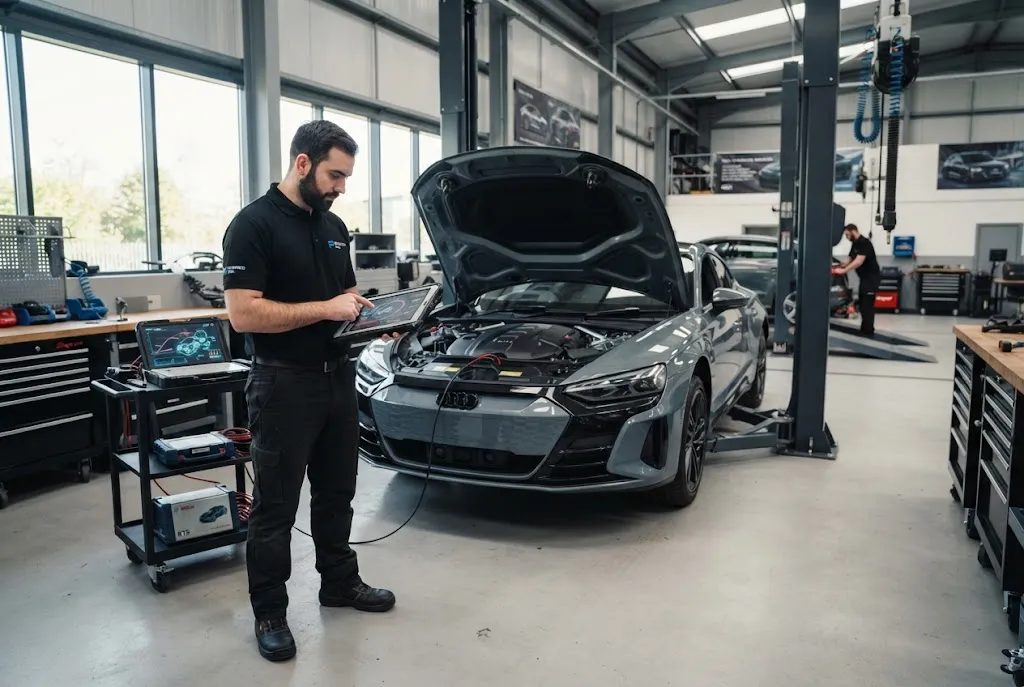
Technology is also making preventative maintenance more sophisticated. Modern vehicles can provide information about faults and maintenance requirements, while workshops increasingly use digital diagnostic equipment.
This connects with the wider development of automotive maintenance technology. Drivers interested in how vehicle servicing is becoming more digital can also explore our coverage of tyre services and emerging maintenance technology.
Preventative maintenance cannot guarantee that unexpected repairs will never happen. Nevertheless, it can help motorists make more informed decisions and potentially avoid allowing minor issues to develop into larger problems.
What the Future Could Mean for Repair Finance
The future of repair finance is likely to be shaped by the combination of digital payments, connected vehicles, preventative maintenance and changing consumer expectations.
As vehicles become more technologically advanced, maintenance information could become increasingly detailed. This may help drivers anticipate certain maintenance needs and plan financially before a repair becomes urgent.
At the same time, digital finance could make payment options more accessible and integrated into automotive services. Greater regulation of some digital credit products may also give consumers clearer information and stronger protections, although the exact rules will depend on the type of finance involved.
Repair businesses are likely to face a similar balancing act. Customers may value convenience and flexible payments, but providers need transparent pricing and responsible finance processes to maintain trust.
Final Thoughts
Repair finance is becoming part of a wider conversation about affordability, maintenance and the true cost of vehicle ownership in the UK. As drivers face increasingly complex vehicles and potentially expensive repairs, flexible payment options can provide an additional way to manage certain costs.
However, financing should never be viewed as a substitute for careful budgeting. Drivers should understand the full cost of borrowing, assess whether repayments are affordable and compare the cost of repairing an existing vehicle with the wider expense of replacing it.
Maintenance plans, preventative servicing and digital vehicle technology may also help motorists take a more proactive approach to ownership. Ultimately, the strongest trend is not simply the growth of finance, but a broader shift towards making vehicle maintenance more predictable, transparent and manageable.