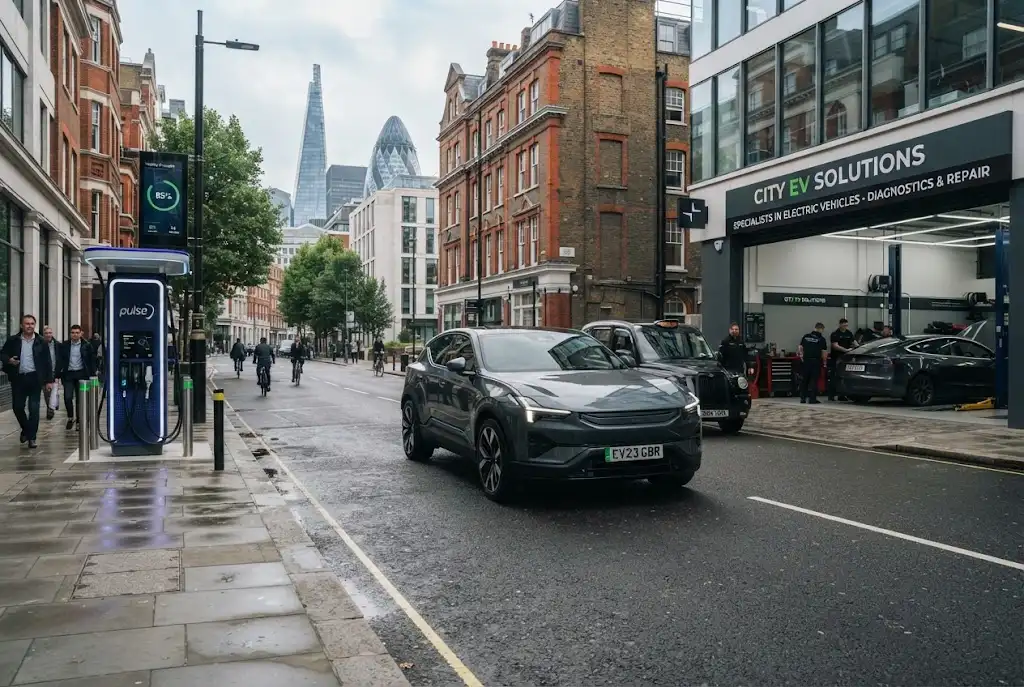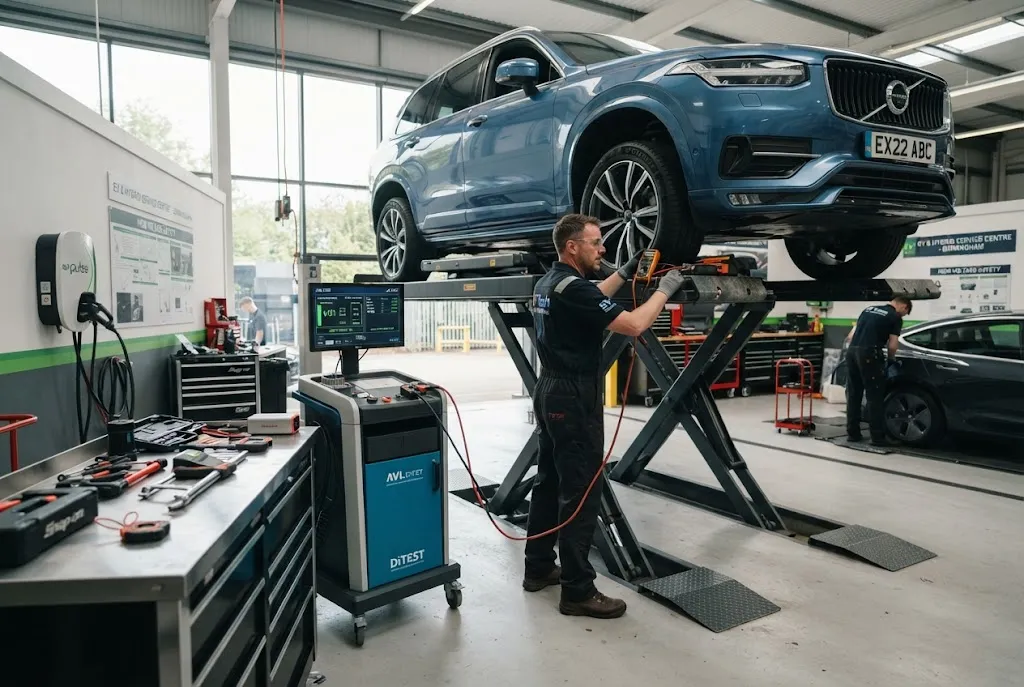


For drivers, this means choosing a garage is becoming less about simply finding a workshop that can change oil and inspect brakes. Modern vehicles can require technicians with specialist knowledge of high-voltage systems, battery technology, electronic diagnostics and vehicle software.
The growth of electrified vehicles also connects with wider developments in auto inspection services, as digital diagnostics and connected vehicle technology become increasingly important when assessing vehicle condition.
What Are Hybrid Services?
Hybrid services cover maintenance, inspection and repair work for vehicles that use both conventional combustion technology and electric propulsion. The exact requirements depend on the type of hybrid vehicle.
Some hybrids can travel short distances using electric power while relying on a petrol engine for longer journeys. Other systems use the electric motor primarily to support the combustion engine and improve efficiency.
Because the systems differ, technicians need to understand both conventional mechanical components and the vehicle’s electrical architecture.
A hybrid service may still involve familiar maintenance tasks such as checking brakes, tyres, suspension, fluids and other components. However, it can also involve specialist diagnostic equipment and procedures associated with the electric drive system.
Why EV Servicing Is Different
Fully electric vehicles have fewer conventional engine components than petrol or diesel cars. They do not require engine oil changes in the same way as combustion vehicles, and they have different powertrain architecture.
However, this does not mean EVs require no maintenance.
Electric vehicles still contain braking systems, tyres, suspension, steering components, cooling systems, electrical components and other parts that require inspection. Their high-voltage systems and battery packs also introduce specialist safety requirements.
This is why EV servicing requires technicians who understand electric vehicle systems rather than simply applying a traditional servicing checklist.
The Growing Importance of EV Mechanics
The shift towards electrification is changing the skills required across the automotive repair industry. EV mechanics need knowledge of high-voltage electrical systems, battery technology, electric motors and electronic diagnostics.
Technicians may also need specialist training and equipment before they can safely work on certain electric and hybrid vehicle systems.
For motorists, this creates an important consideration when choosing a garage. A workshop that regularly works on conventional cars may not necessarily have the equipment, training or procedures required for every hybrid or electric vehicle.
Drivers should therefore ask whether a garage has technicians appropriately trained for their specific vehicle before booking specialist work.
Electric Vehicle Maintenance Still Matters
One misconception about electric vehicles is that reduced mechanical complexity means maintenance can be ignored.
In reality, electric vehicle maintenance remains important. Tyres are particularly significant because EVs can be heavier than comparable combustion vehicles, while instant electric torque can also influence how the vehicle is driven.
Brakes require attention as well, even though regenerative braking can reduce the use of conventional friction brakes in some driving conditions. Suspension, steering, lights, wipers, cooling systems and other components also remain relevant to vehicle condition.
The manufacturer’s maintenance schedule should therefore remain the starting point for determining what work a particular EV requires.
Battery Technology and Vehicle Maintenance
The traction battery is one of the most important components in an electric or hybrid vehicle. Battery technology has developed significantly, but battery condition remains an important consideration for owners.
Battery systems contain complex electronic controls designed to manage charging, temperature and power delivery. Depending on the vehicle, the battery may also be covered by a specific manufacturer warranty with its own terms and conditions.
Drivers should avoid attempting to diagnose or repair high-voltage battery systems themselves. Specialist assessment is appropriate when a battery-related warning appears or when a vehicle develops an electrical fault.
Battery health can also become increasingly relevant when an electric vehicle is sold. Buyers may want information about battery condition alongside conventional vehicle history and maintenance records.
Charging Infrastructure and Servicing
Charging infrastructure is an important part of electric vehicle ownership, although charging equipment itself is not generally part of routine vehicle servicing.
Drivers may use home charging, workplace facilities or public charging networks depending on their circumstances. A reliable charging setup can make EV ownership considerably more convenient, while problems with charging equipment can sometimes appear similar to vehicle faults.
When a vehicle fails to charge correctly, the cause could involve the car, charging cable, charging equipment, software or the electricity supply. A qualified technician can help determine where the problem originates.
As the UK’s charging network develops, knowledge of charging technology is likely to become an increasingly useful part of the wider EV service ecosystem.
Regenerative Braking and Brake Maintenance
Regenerative braking is one of the major differences between many electrified vehicles and conventional cars.
When the driver slows down, the electric motor can operate in a way that converts some of the vehicle’s kinetic energy into electrical energy. This energy can then be returned to the battery system.
Because regenerative braking can reduce reliance on conventional friction brakes, the brake components may experience different wear patterns from those of a conventional vehicle.
That does not mean brakes can be ignored. Brake discs, pads, callipers and associated components still need appropriate inspection, particularly because corrosion or lack of use can become relevant in some circumstances.
Hybrid Services and Digital Diagnostics
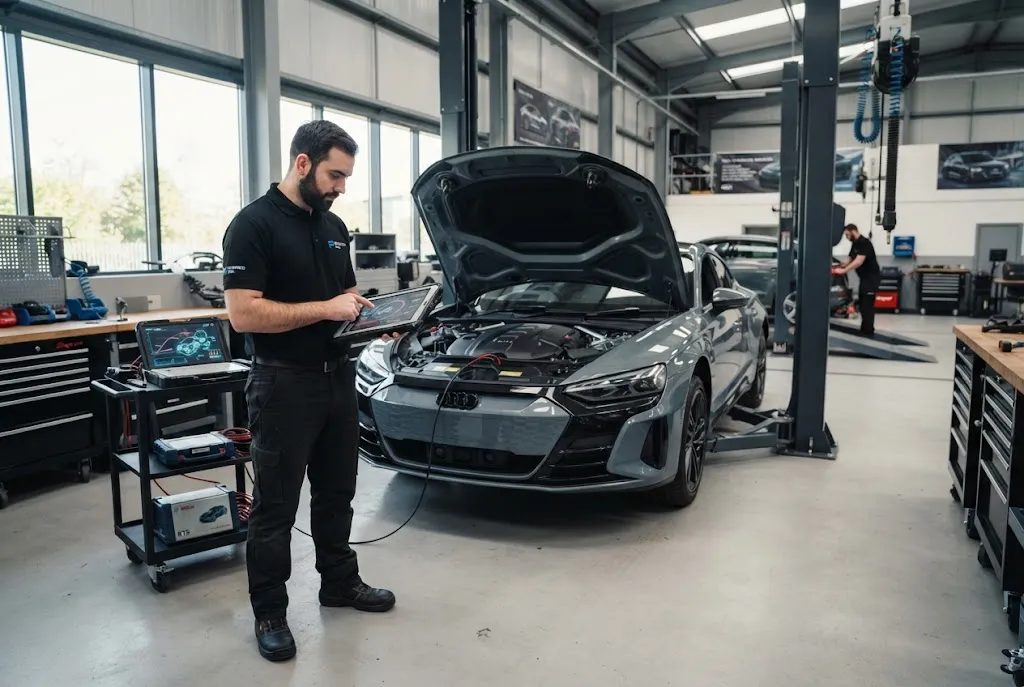
Modern hybrid and electric vehicles rely heavily on electronic control systems. As a result, digital diagnostics are becoming an important part of professional servicing.
A warning light can represent anything from a relatively minor issue to a problem involving a major vehicle system. Diagnostic equipment can help technicians retrieve fault information and determine which components require further investigation.
This is one reason the modern garage increasingly combines mechanical inspection with electronic diagnostics.
The trend also connects with the broader development of MOT and service technology, where digital records and increasingly sophisticated vehicle information are becoming part of the maintenance experience.
Do Hybrid and Electric Cars Need MOTs?
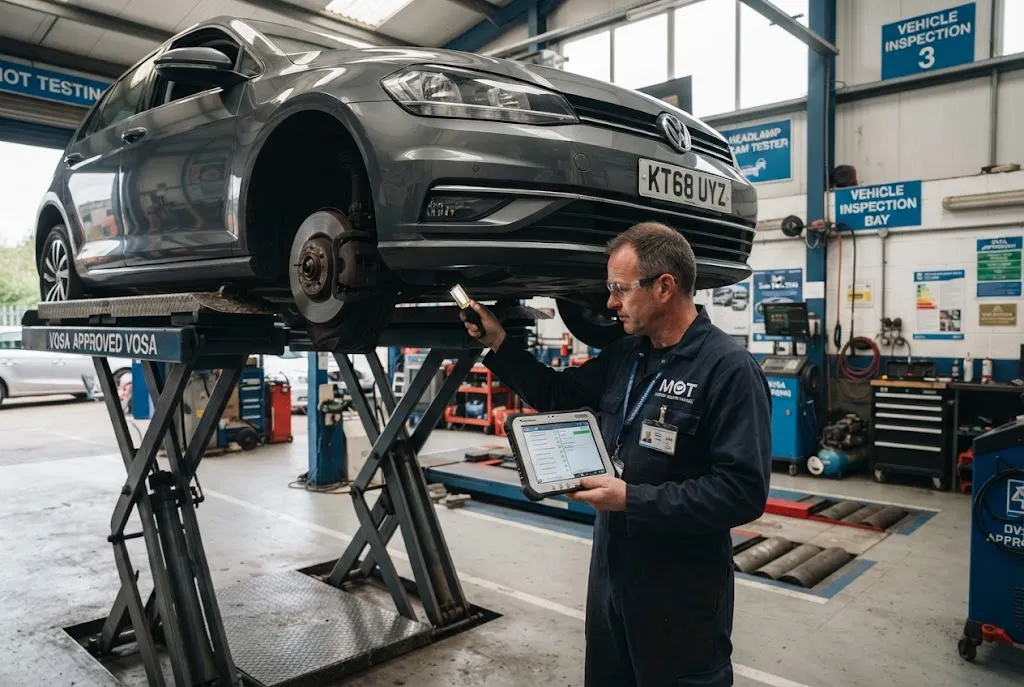
Hybrid and electric vehicles remain subject to the UK’s MOT requirements when they reach the applicable testing age and conditions.
The MOT focuses on specified testable components and systems. It is not a substitute for manufacturer-recommended servicing, and passing an MOT does not mean every aspect of an electric or hybrid vehicle is in perfect condition.
This distinction is especially useful for EV owners because the absence of a conventional combustion engine does not eliminate the need for broader vehicle maintenance.
Drivers should therefore keep their MOT schedule separate from their vehicle’s recommended servicing programme.
How Hybrid Services Could Evolve
The servicing market is likely to change as the number of electrified vehicles on UK roads grows.
Garages may increasingly need dedicated high-voltage tools, battery diagnostic systems, specialist training and updated safety procedures. Workshops may also need to invest in software and equipment capable of communicating with newer vehicle systems.
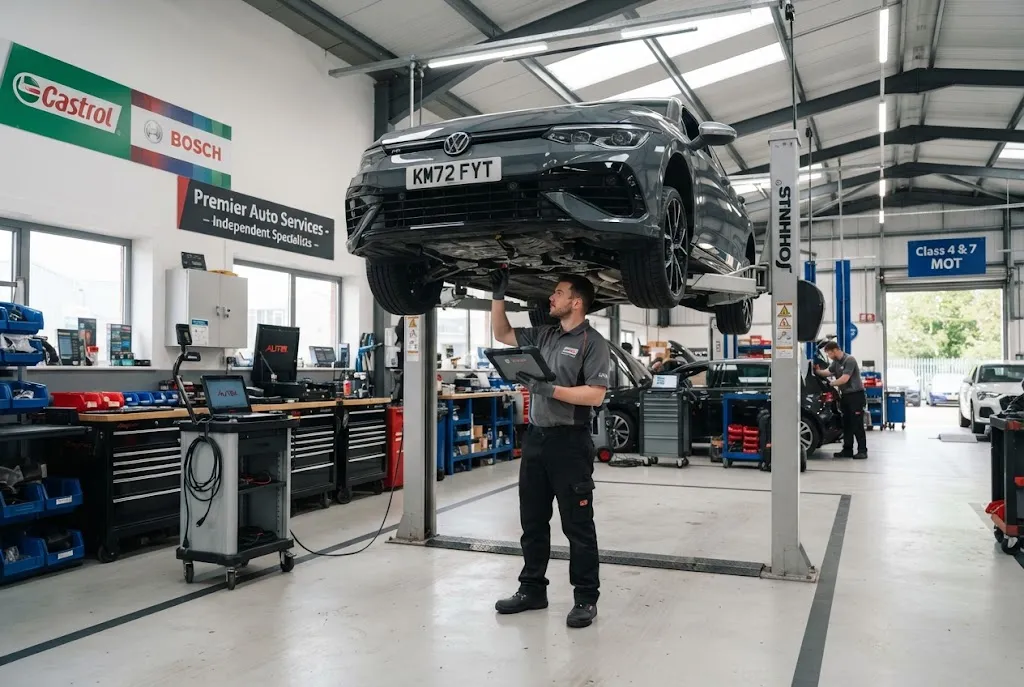
At the same time, traditional mechanical skills will remain important. Electric vehicles still use tyres, brakes, steering, suspension and other conventional automotive components.
The future workshop is therefore likely to combine mechanical expertise with electrical and digital capabilities rather than abandoning traditional automotive skills.
Will EVs Reduce Servicing Costs?
Electric vehicles can have different maintenance requirements from combustion vehicles, but it would be misleading to assume that every EV will automatically cost less to maintain.
Some routine engine-related maintenance does not apply to fully electric vehicles. However, specialist diagnostics, high-voltage training, battery systems and advanced electronic components can require specialised expertise.
The overall cost depends on the vehicle, age, mileage, manufacturer requirements, garage and work required.
For motorists, the more useful comparison is therefore the complete ownership picture rather than focusing on a single service item.
What Drivers Should Ask an EV Garage
Before booking maintenance for a hybrid or electric vehicle, drivers can ask several straightforward questions.
- Does the garage regularly service my type of hybrid or EV?
- Are technicians trained to work on high-voltage systems?
- Does the workshop have the required diagnostic equipment?
- Can the garage inspect and diagnose battery-related issues?
- Will the work follow the manufacturer’s service requirements?
- Are diagnostic checks included in the quoted price?
- Will the garage provide a record of completed maintenance?
These questions can help motorists distinguish between a workshop that simply accepts electric vehicles and one that has developed the specialist capabilities needed to support them properly.
The Role of Smart Transport in Future Vehicle Maintenance
Electrification is only one part of the wider transformation taking place in transportation. Connected vehicles, intelligent charging systems, advanced driver assistance technologies and digital maintenance platforms are also changing the way vehicles interact with infrastructure and service providers.
Smart transport systems could eventually allow more information to move between vehicles, charging infrastructure, manufacturers and maintenance providers.
This could create new opportunities for proactive servicing. A vehicle may eventually provide increasingly detailed information about its condition, allowing maintenance decisions to be based on actual usage and system data alongside scheduled service intervals.
These developments form part of the wider automotive trends reshaping mobility in the UK and internationally.
Hybrid Services and the Future of Automotive Maintenance
The rise of hybrid and electric vehicles is changing what motorists should expect from automotive maintenance. The traditional model of servicing a combustion engine remains relevant for many vehicles, but electrification is introducing new systems, skills and safety requirements.
Hybrid services will increasingly involve a combination of mechanical knowledge, electrical expertise and digital diagnostics. EV servicing will similarly depend on technicians who understand batteries, high-voltage systems and connected vehicle technology.
For drivers, the most important step is to choose maintenance providers with the appropriate equipment, training and experience for their particular vehicle.
As battery technology develops and charging infrastructure expands, the automotive service industry will continue adapting. The future vehicle workshop is likely to be more digital, more specialised and increasingly focused on managing the relationship between mechanical systems, electrical power and software.