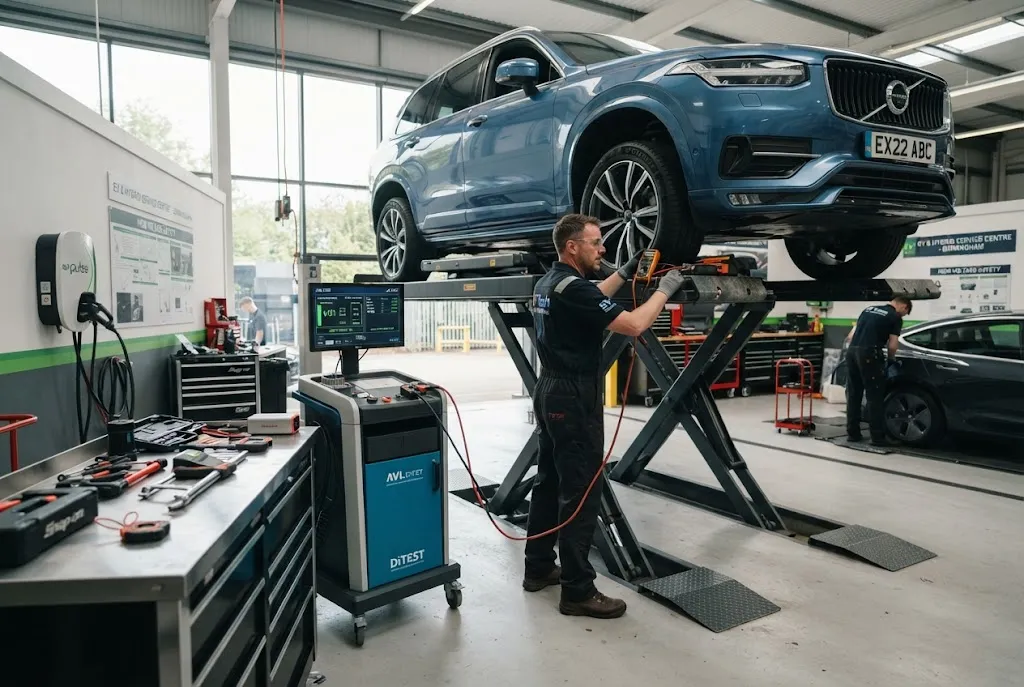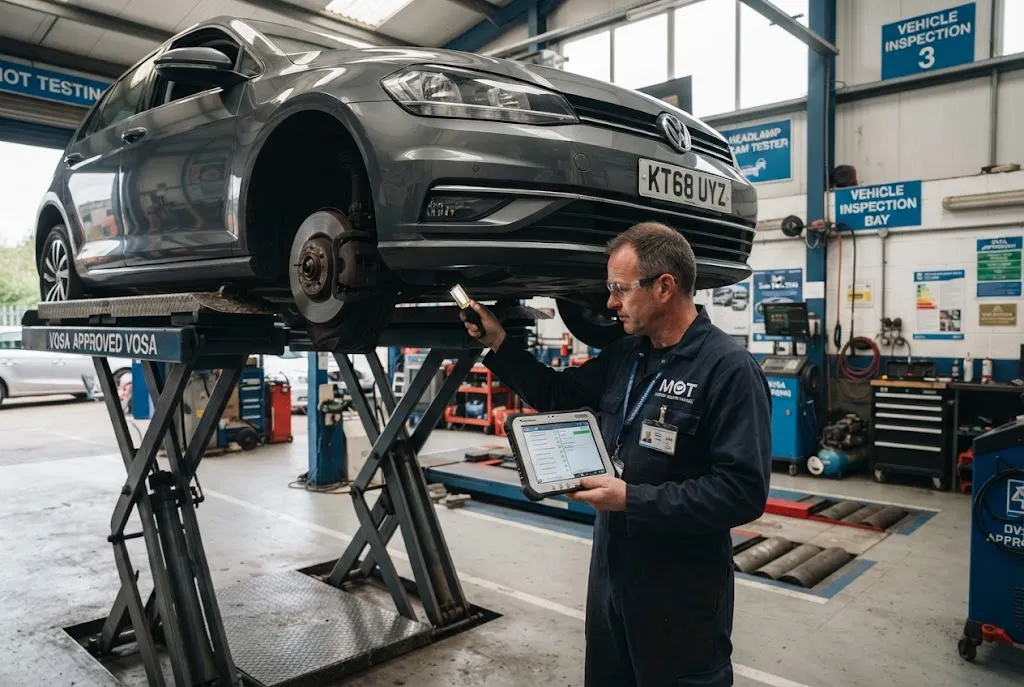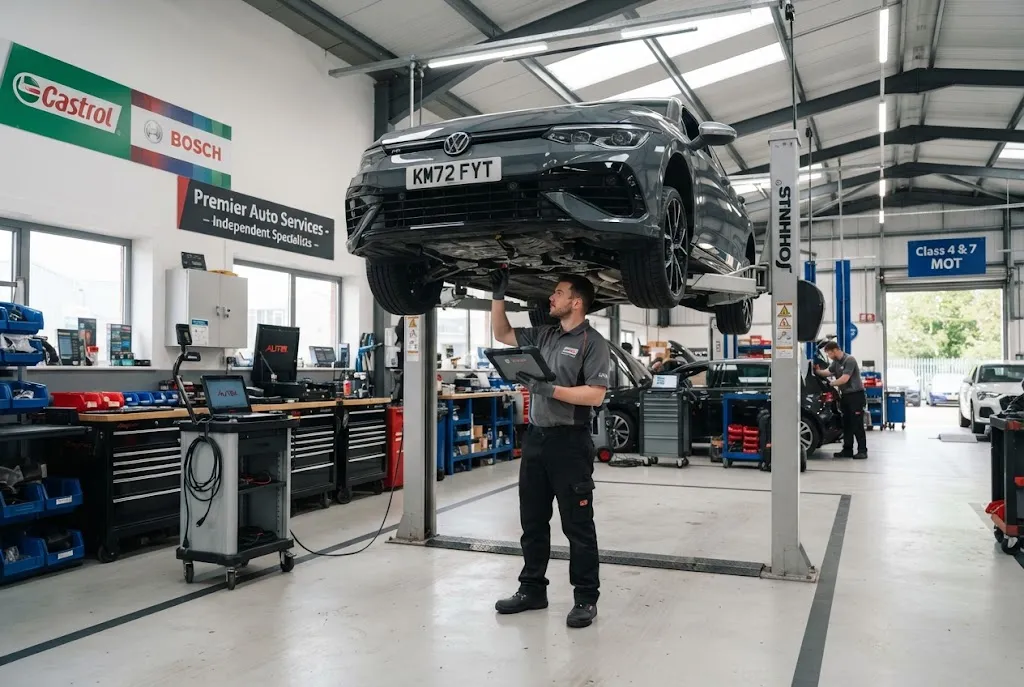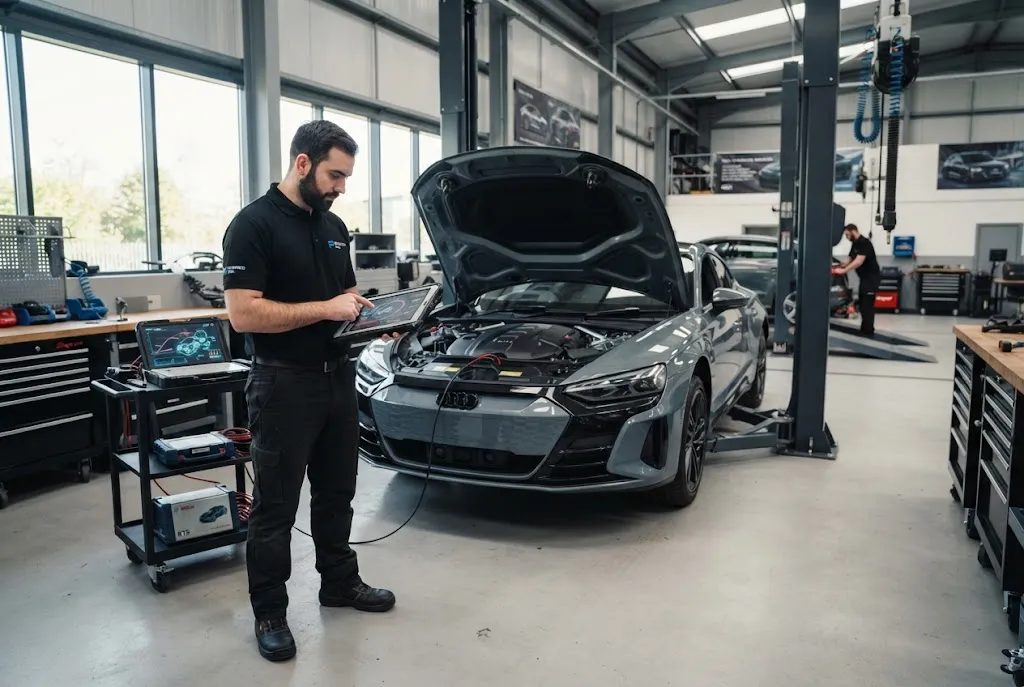


This does not mean artificial intelligence is replacing mechanics or automatically determining whether a vehicle is roadworthy. Instead, emerging technology can help technicians collect information, identify patterns and decide where further investigation may be useful. For motorists, the result could eventually be a more detailed and proactive approach to vehicle maintenance.
The development of AI-powered inspections also builds directly on the wider shift towards digital MOT and service processes, where electronic records, diagnostic equipment and connected systems are already becoming part of the automotive environment.
What Are Auto Inspection Services?
Auto inspection services cover a range of vehicle checks designed to assess the condition of a car and identify potential mechanical, electrical or safety-related issues.
A conventional inspection may involve checking tyres, brakes, suspension, fluid levels, lights, steering components and other visible or accessible systems. A modern inspection can add electronic diagnostics, sensor information and computer-generated vehicle health data to the process.
The exact scope depends on the garage, vehicle and type of inspection. A statutory MOT, for example, is different from a comprehensive pre-purchase inspection or a manufacturer’s scheduled service.
AI and digital technology are adding another potential layer by helping technicians process information from multiple sources more efficiently.
How AI Diagnostics Can Support Vehicle Inspections
AI diagnostics generally refers to software systems that use algorithms or machine-learning techniques to analyse vehicle information and identify patterns that may indicate a fault or developing problem.
Modern vehicles can produce information from numerous sensors and electronic control systems. When this information is combined with diagnostic codes, service history and other relevant data, software can potentially identify relationships that may not be immediately obvious from a single warning light.
For example, an electronic fault may produce several related symptoms. An advanced diagnostic system could help organise those signals and present them to a technician for further assessment.
The important distinction is that an AI-generated indication is not necessarily a confirmed mechanical diagnosis. A qualified technician still needs to interpret the information and determine what physical inspection or repair is appropriate.
Digital Inspections Are Becoming More Detailed
Digital inspections can improve the way workshop findings are recorded and communicated. Instead of relying exclusively on handwritten notes, technicians can use tablets or workshop software to document observations, attach photographs and record recommended work.
This can make the inspection process easier for both garages and customers. A driver may receive a clearer explanation of which components were checked, what condition they were found in and which issues require attention.
Digital inspection records can also create a more consistent maintenance history. Over time, this information may help technicians understand how a vehicle has changed rather than assessing every visit as an isolated event.
The wider move towards digital vehicle information is also visible in the UK’s official MOT system, where test results are stored electronically and motorists can access MOT history online.
Vehicle Health Reports and Better Maintenance Decisions
One of the most useful applications of modern inspection technology is the creation of detailed vehicle health reports.
A vehicle health report can bring together inspection observations, diagnostic information and maintenance recommendations in a format that is easier for the owner to understand.
For example, a report might separate immediate concerns from components that are functioning correctly but may require attention in the future. This gives drivers more information when deciding whether work needs to be completed immediately or planned for a later date.
However, motorists should examine what a particular report actually includes. There is no single universal definition of a digital vehicle health report, so the depth and accuracy of information can vary between providers and systems.
Predictive Analytics and Preventive Maintenance
Predictive analytics could eventually have a major impact on vehicle maintenance. Traditional servicing often follows a scheduled interval based on time, mileage or manufacturer recommendations. Predictive systems attempt to add another dimension by assessing available data for signs of changing component condition.
In principle, a system could identify patterns associated with increased wear or an emerging fault before the driver experiences a major failure.
This approach is particularly relevant to connected vehicles because they can generate large amounts of operational data. If that information is captured appropriately, software can potentially analyse it and highlight unusual patterns.
Predictive maintenance does not eliminate routine servicing. Instead, it can potentially complement scheduled maintenance by giving technicians and vehicle owners additional information between service intervals.
Connected Vehicles Are Changing Inspection Technology
Connected vehicles are an important part of the transition towards data-driven automotive maintenance.
Modern cars contain numerous electronic systems that communicate with one another. Depending on the vehicle, information may be generated about engine operation, battery systems, braking, driver assistance systems, tyre pressures and other components.
When technicians can access appropriate diagnostic information, they may be able to investigate problems more efficiently.
Connected technology also creates opportunities for remote monitoring and maintenance alerts. However, access to vehicle data raises important questions about data security, privacy, manufacturer systems and who is authorised to access particular information.
AI Inspections Versus Traditional Inspections
AI-powered inspection technology should be viewed as an evolution of traditional inspection rather than a simple replacement.
Experienced technicians bring practical knowledge that software cannot independently reproduce in every situation. They can hear unusual noises, assess physical wear, interpret symptoms and examine components directly.
AI systems, meanwhile, can be particularly useful for processing large amounts of structured information and identifying patterns across diagnostic data.
The two approaches can therefore complement each other.
- Traditional inspection: relies heavily on technician observation and physical assessment.
- Digital inspection: adds electronic records, photographs and structured reporting.
- AI-assisted inspection: can analyse data and highlight patterns for further investigation.
- Predictive maintenance: aims to identify potential problems before they become major failures.
The most effective approach will depend on the vehicle, inspection purpose, available technology and technician expertise.
Can AI Identify Vehicle Problems Without a Mechanic?
AI can assist with identifying patterns, but motorists should be cautious about treating software output as a complete mechanical diagnosis.
A diagnostic code, sensor reading or algorithmic alert may indicate that a system requires attention. It does not necessarily explain the physical cause of the problem.
Several different mechanical faults can sometimes produce related electronic symptoms. A technician may therefore need to perform additional tests before recommending a repair.
This is particularly important when safety-critical systems are involved. Braking, steering, suspension and other essential components require appropriate physical assessment rather than relying solely on an automated recommendation.
Inspection Technology and Electric Vehicles
The growth of electric and hybrid vehicles is adding another reason for workshops to develop their diagnostic capabilities.
Electric vehicles contain high-voltage battery systems, electric motors, power electronics and specialised thermal-management systems. Hybrid vehicles combine electrical components with internal combustion technology.
These vehicles can therefore require different diagnostic knowledge from conventional petrol and diesel cars.
AI diagnostics and digital inspection tools may become increasingly valuable in this environment because electronic information is already central to the operation of modern vehicles.
The changing vehicle mix also connects with the broader development of hybrid services and EV servicing, where technicians increasingly need specialist knowledge and equipment.
How AI Could Improve Customer Communication
Vehicle repair can sometimes be difficult for motorists to understand because technical problems are not always visible.
Digital inspection systems can help bridge this communication gap by presenting findings in a structured format. Photographs, diagnostic information and simple explanations can give customers a clearer picture of what the technician has found.
AI-assisted systems may eventually help translate technical diagnostic information into easier-to-understand summaries. Even then, garages should ensure that automated explanations do not exaggerate certainty or recommend unnecessary work.
Transparency will remain important. Customers should be able to distinguish between an observed defect, a diagnostic indication and a recommendation for further investigation.
How Auto Inspection Services Could Affect Repair Costs
Advanced inspection technology could influence repair costs in several different ways.
Better diagnostics may help technicians identify problems more efficiently, potentially reducing time spent searching for the source of a fault. Early detection could also allow some issues to be addressed before they develop into more expensive failures.
However, sophisticated equipment, software subscriptions, technician training and specialist tools also create costs for garages. These investments can form part of the wider pricing structure of modern automotive services.
This means advanced inspection does not automatically mean cheaper repairs. Its value is more closely connected to whether the technology improves diagnostic accuracy, reduces unnecessary work and helps customers make informed maintenance decisions.
What Drivers Should Look for in Digital Inspections
When choosing a garage offering advanced inspection technology, motorists should look beyond claims about artificial intelligence.
A useful inspection service should clearly explain what is being checked and how the results are produced.
- Ask what systems and components are included in the inspection.
- Find out whether diagnostic scanning is included.
- Ask whether photographs or digital records are provided.
- Check whether a qualified technician reviews the results.
- Ask which recommendations are urgent and which can be planned.
- Request clarification if an automated report identifies a potential fault.
- Make sure safety-critical repairs are physically assessed where necessary.
A digital report is most useful when it improves understanding rather than simply producing a large amount of technical information.
The Future of Vehicle Inspection Technology
The automotive industry is moving towards increasingly connected and data-rich vehicles. As this happens, inspection technology is likely to become more sophisticated.
Future systems could combine diagnostic codes, sensor data, photographs, service history and connected-vehicle information to produce increasingly detailed assessments.
Computer vision may also become more capable of recognising visible defects in components such as tyres, bodywork and other accessible areas. Predictive systems could then use historical data to identify maintenance patterns.
However, the future is unlikely to be completely automated. Physical inspection, professional judgement and accountability will remain important, particularly when safety-critical decisions are involved.
The most significant change may therefore be the relationship between people and technology. Instead of replacing technicians, advanced systems can provide them with better information and help them make more informed decisions.
Why Auto Inspection Services Matter to Modern Drivers
The development of auto inspection services reflects a broader transformation in vehicle ownership. Cars are becoming more electronically sophisticated, workshops are becoming more digital and motorists are gaining access to more information about their vehicles.
AI diagnostics, digital inspections, connected vehicles and predictive analytics can potentially make maintenance more proactive. Yet technology works best when its findings are interpreted responsibly by qualified automotive professionals.
For drivers, the practical benefit is greater transparency. A detailed inspection can help explain the condition of a vehicle, identify areas that deserve attention and support better maintenance planning.
As automotive technology continues to develop, these systems will increasingly sit alongside conventional servicing, MOT testing and specialist repair. The result is likely to be a more connected approach to vehicle health, where digital information supports rather than replaces professional automotive expertise.