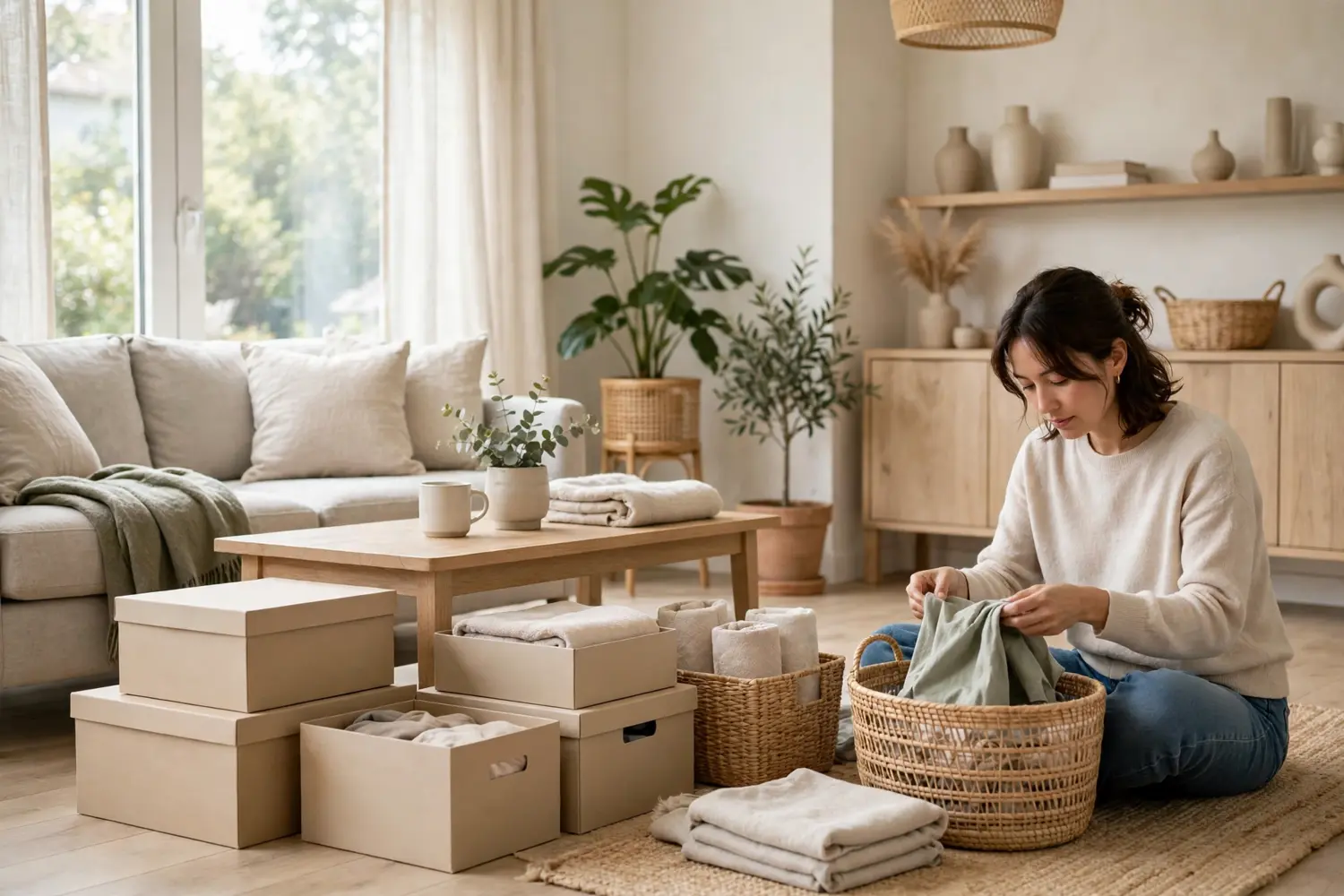


Decluttering fails when it is treated as one exhausting weekend of bin bags and regret. It works when it is treated as a system: one room at a time, clear rules for what stays, and a home for everything that survives. If you want to know how to declutter your home without the chaos, this room-by-room plan is built for real houses and real schedules, including the ones with children, pets and far too many chargers.
The Rules Before You Touch Anything
Start with three boxes or bags: charity and selling, recycling and rubbish, and “belongs in another room”. Every item you pick up goes into your hands once and into a decision once. Keep only what you use, genuinely love, or would buy again at its current price; everything else is a guest that has overstayed. Take the filled bags out of the house the same day, because a charity bag by the door for a month is just clutter with better intentions.
Work in sessions of an hour or two, one room at a time, and finish each room completely before starting the next. A finished room is motivating; five half-finished rooms are how people give up. If you share the home, agree the rules first, and never declutter someone else’s personal belongings on their behalf.
Living Room and Kitchen: The High-Traffic Rooms
The living room collects the household’s drift: remotes, magazines, toys, exercise equipment with good intentions. Clear the flat surfaces first, because visible calm changes how the whole home feels. Keep only the seating-side items you reach for weekly, rehome the rest, and give the survivors proper places: a basket for blankets, a tray for remotes, a single box for chargers. The kitchen is stricter territory. Work shelf by shelf and be honest about duplicate utensils, novelty gadgets and the pan you have not used in two years. Food cupboards come last: check dates, combine half-used packets, and make a list of what needs eating before it is replaced.
Homes with animals accumulate a second, quieter layer of clutter in leads, toys, bowls and bedding. If you are still deciding whether a pet fits your household at all, our guide to choosing the right pet for your lifestyle covers the realities honestly; if the pet is already family, give its equipment one defined basket or cupboard and let the declutter rules apply there too.
Bedrooms, Wardrobes and the Bathroom
The wardrobe is where most declutters stall, so use the hanger test: turn every hanger the same way, and after an item is worn, return it facing the other way. In a few months the untouched hangers tell the truth without arguments. Clothes that no longer fit your life, not just your body, go to the charity bag. In the bedroom itself, clear the surfaces beside the bed; a calm room to wake in is the whole point of the exercise.
The bathroom is quick and satisfying. Products multiply here: half-used bottles, hotel minis, expired medicines and more makeup than anyone wears. The shelf audit in our K-Beauty trends feature shows how quickly routines expand; keep the products in your real routine, recycle the empties, and return medicines to a pharmacy for safe disposal. One basket for daily products and one cupboard for spares is all the system a bathroom needs.
How to Declutter Your Home: Paperwork and the Digital Pile
Paper is the clutter that reproduces. Set up three folders: action, file, and shred. Open post beside them for a month and the pile stops growing. Then shrink what you keep: most statements and bills exist online, so retain only certificates, property documents, warranties and anything HMRC might ask about. Scan the borderline items if you are unsure, and shred the rest.
Digital clutter counts too. A desktop buried in files and a phone with nine thousand photos create the same low-level stress as a messy room. Spend one session unsubscribing from mailing lists, deleting duplicate photos, and moving documents into a handful of named folders. If the machine itself is part of the problem, our step-by-step guide to speeding up a slow laptop pairs neatly with a digital clear-out, and a tidy machine encourages tidy habits.
The Spare Room, Loft and Garage
Every home has a final frontier where decluttering decisions go to be postponed. Treat the spare room by its intended job: if it is a guest room, it should contain a bed and little else; if it has become storage, admit it and organise it as storage, with labelled boxes on shelving rather than piles. The loft and garage follow one rule: you should be able to name what is in every box without opening it. Seasonal decorations, luggage and genuinely kept memorabilia earn their space; broken equipment you might repair one day, and boxes unopened since the last move, are simply rent-free tenants. Photograph the contents labels as you pack them away and the next search through the loft takes minutes instead of an afternoon.
Keeping It Clear
A decluttered home stays decluttered through small rules, not willpower. Operate one-in-one-out for clothes, books and kitchenware. Keep a permanent charity bag in a cupboard and fill it as you go. Give new purchases a home before they enter the house, and run a fifteen-minute reset each week on the room that drifts fastest. Every six months, repeat a light version of this plan; the second pass is always faster, because you are maintaining a system rather than rescuing a house.
The Bottom Line
Understanding how to declutter your home is really about decisions made once, properly: decide what earns its place, room by room, give everything a home, and let a few small rules keep it that way. The result is not a show home. It is a house that is quicker to clean, easier to live in, and noticeably calmer to come back to, which is what you wanted from the bin bags all along.