

A car battery replacement is rarely planned. Most drivers meet it on a cold morning, turning the key or pressing the start button and hearing the engine crank slowly, or not at all. Yet a battery almost always gives warning signs before it gives up completely, and choosing the right replacement is straightforward once you know what the numbers on the label mean. This guide covers how to spot a failing battery, how long batteries typically last, what a replacement costs in the UK, and how to choose and fit the correct battery for your car.
How Long Does a Car Battery Last?
A typical car battery lasts somewhere in the region of three to five years, although its lifespan depends heavily on how the car is used. Frequent short journeys are the hardest pattern of all, because the battery gives up a large amount of charge starting the engine and the alternator has little time to replace it. Cars that sit unused for weeks at a time also suffer, as the battery slowly discharges and sulphation builds up on the plates. Cold weather exposes a weak battery rather than causing the problem: a battery that coped through summer often fails on the first frosty morning because a cold engine needs more power to turn while the battery itself delivers less.
Modern cars place heavier demands on the battery than older ones did. Stop-start systems, heated screens and seats, and the electronics that stay awake after the car is locked all draw on it, which is why the correct battery specification matters more than it used to. These wider electrical demands are part of the shift described in our look at EV servicing and the growing overlap between mechanical and electrical work in modern workshops.
Signs Your Battery Is Failing
Slow cranking and electrical quirks
The classic sign is an engine that turns over slowly and reluctantly, particularly on the first start of the day. You may also notice dim headlights at idle, warning lights that appear briefly at start-up, or electrical systems, such as the stop-start, quietly switching themselves off to preserve charge. Many cars will tell you more than you might expect: a battery warning from the car itself should never be ignored for long.
Age, swelling and corrosion
Check the date on the battery label. If it is more than four years old and the car is showing any starting symptoms, testing is worthwhile. A case that looks swollen or distorted, or heavy corrosion around the terminals, also points to a battery near the end of its life. Most garages and motor factors will test a battery free of charge or for a small fee, and a proper test measures its actual capacity rather than just its voltage.
Choosing the Right Replacement Battery
Batteries are not interchangeable, even when they look the same size. The replacement must match the physical dimensions and terminal layout, and it must meet or exceed the original specification for capacity, measured in amp hours (Ah), and cold cranking amps (CCA), which describes how much power it can deliver to start a cold engine. Cars with stop-start systems need a battery designed for the job, either an EFB or the more durable AGM type, and fitting a basic conventional battery in their place usually leads to a short life and disabled stop-start.
On many modern cars the new battery also has to be registered with the car’s battery management system so that charging rates adjust to the new unit. This is one of the ways routine maintenance has become more technical, a theme we cover in our guide to auto services and modern car care. If your car needs registration or coding, a garage or mobile technician with the right diagnostic equipment is the sensible choice.
What Does Car Battery Replacement Cost in the UK?
The battery itself commonly costs somewhere in the region of £60 to £200 depending on size, capacity and type, with AGM batteries for stop-start cars at the top of that range and beyond. Fitting is usually quick, often fifteen to thirty minutes, and many retailers include fitting in the price or charge a modest fee. A mobile fitting service will typically cost a little more than visiting a workshop, in line with the convenience described in our article on mobile auto services, but it solves the obvious problem of a car that will not start at home.
Be wary of choosing purely on price. A battery with a longer guarantee, usually three to five years, and the correct specification will almost always work out cheaper over its life than an under-specified budget unit that fails in its second winter.
Helping Your New Battery Last
Once the new battery is fitted, a few habits will help it reach its full lifespan. Use the car for a decent-length journey regularly so the battery can recharge fully, and if the car is used rarely, consider a smart trickle charger to keep it topped up. Switch off lights and accessories before starting, keep the terminals clean and tight, and have the charging system checked if the car ever shows another battery warning soon after a replacement, because a failing alternator can drain a healthy battery. These small checks fit neatly into the routine described in our vehicle maintenance guide, and pairing them with your annual MOT and service means the battery’s condition is reviewed before winter rather than discovered during it.
A car battery replacement is one of the simplest jobs in motoring when it is done at the right time. Watch for the early signs, test rather than guess, and replace on your own schedule instead of the battery’s.
Can You Replace a Car Battery Yourself?
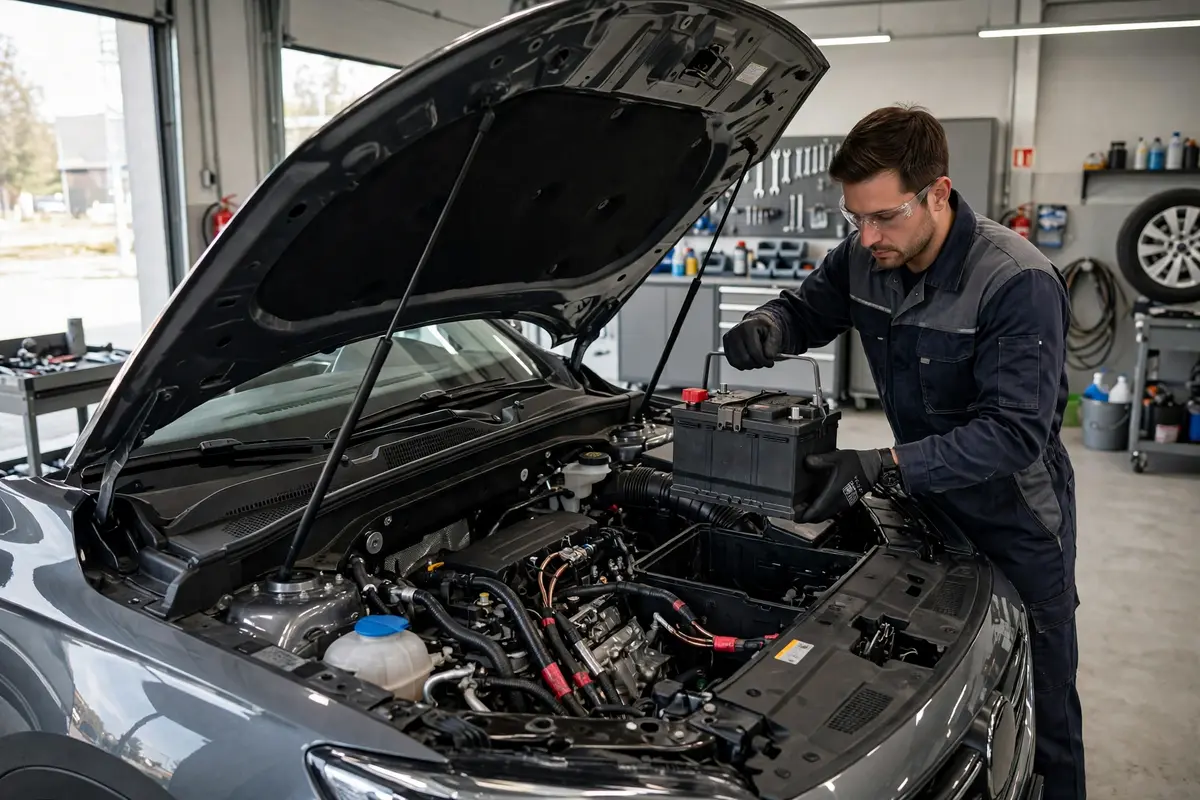
On many older cars, yes. The job itself is simple: with the ignition off, disconnect the negative terminal first, then the positive, unbolt the clamp, lift the old battery out (they are heavier than they look, often 15 to 25 kilograms), and reverse the process with the new one, connecting the positive terminal first. A memory saver plugged into the car’s power socket can preserve radio codes and settings while the battery is disconnected.
There are, however, good reasons many owners now leave it to a garage or mobile fitter. Batteries in some modern cars are buried under trim, seats or intake pipework; stop-start cars may need the new battery registered to the management system; and a slipped spanner across the terminals can cause serious damage or injury. Old batteries must also be disposed of properly, since they contain lead and acid, and retailers who sell you a new one will normally take the old unit for recycling. If your car is straightforward and you are confident, DIY is perfectly reasonable. If the battery is hidden, coded or part of a stop-start system, professional fitting is money well spent.