

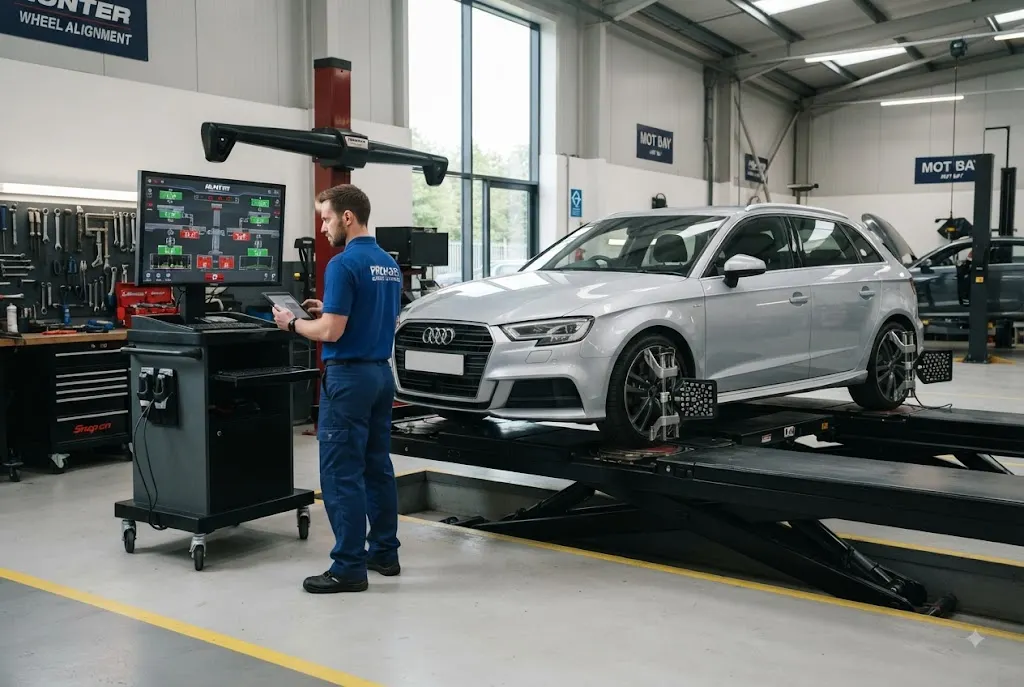
Wheel alignment is an important part of vehicle maintenance because the position of the wheels can affect steering behaviour, tyre wear and overall handling. When alignment angles move outside the manufacturer’s recommended range, a vehicle may develop uneven tyre wear, pull to one side or feel less stable on the road.
Modern workshops are changing how alignment is checked and adjusted. Traditional alignment procedures are increasingly supported by digital equipment, computerised measurements and advanced diagnostic systems. These developments can make it easier for technicians to identify alignment issues accurately and explain the required work to customers.
For UK motorists, understanding wheel alignment can help identify potential problems earlier and make it easier to decide when a professional inspection is appropriate.
What Is Wheel Alignment?
Wheel alignment is the process of checking and, where necessary, adjusting the angles of a vehicle’s wheels so they are positioned according to the manufacturer’s specifications.
Alignment is not simply about making all four wheels point in exactly the same direction. Different vehicles are designed with specific alignment settings that influence steering, handling, stability and tyre contact with the road.
The main alignment measurements can include toe, camber and caster. Depending on the vehicle, other geometry measurements may also be relevant.
A professional workshop uses suitable equipment to measure these angles and compare them with the appropriate specifications. If measurements fall outside acceptable ranges, technicians can investigate the cause and determine whether adjustment or further suspension repairs are required.
Why Wheel Alignment Matters
Correct alignment helps the vehicle’s tyres maintain the intended relationship with the road. When the geometry is incorrect, a tyre may not wear evenly across its tread.
The UK Highway Code’s vehicle maintenance guidance specifically notes that excessive or uneven tyre wear can be caused by braking or suspension faults, or by wheels being out of alignment. It advises that such faults should be corrected as soon as possible. :contentReference[oaicite:0]{index=0}
Alignment can therefore be relevant to several aspects of vehicle ownership, including:
- Tyre wear
- Steering feel
- Vehicle stability
- Handling behaviour
- Tyre life
- Driving comfort
It is important to remember that alignment is only one possible cause of uneven tyre wear or steering problems. Suspension components, tyre pressure, wheel damage and other faults can produce similar symptoms.
Signs Your Vehicle May Need Wheel Alignment
Drivers may notice several signs when a vehicle’s wheel geometry needs attention. One common warning sign is uneven wear across one or more tyres.
Another possible symptom is a vehicle that tends to pull to one side when driving on a reasonably level road. A steering wheel that does not sit as expected when the vehicle is travelling straight can also justify an inspection.
Other potential indicators include:
- Uneven or accelerated tyre wear
- A steering wheel that appears off-centre
- The vehicle drifting or pulling to one side
- Changes in handling after hitting a pothole or kerb
- Unusual steering behaviour
- New tyres developing uneven wear
These symptoms should not automatically be attributed to alignment. Tyre pressure, suspension condition and braking problems can also affect how a vehicle behaves.
Wheel Alignment and Tyre Wear
One of the strongest reasons motorists consider alignment is tyre wear.
Tyres are designed to contact the road in a particular way. If wheel geometry is incorrect, part of the tread may experience more stress than intended. Over time, this can produce uneven patterns and potentially shorten the useful life of the tyre.
Regular tyre checks can help identify problems before they become more serious. UK government guidance states that drivers should check tyres and highlights the importance of correct inflation and identifying defects. It also notes that abnormal tyre wear can be a reason to have the vehicle checked. :contentReference[oaicite:1]{index=1}
However, drivers should not wait for severe tyre wear before investigating a possible alignment issue. If a car has developed a noticeable steering change after an impact or suspension repair, an inspection may be sensible even when the tyres still look relatively healthy.
Wheel Alignment vs Wheel Balancing
Wheel alignment and wheel balancing are different services, although motorists sometimes confuse them.
Alignment concerns the position and geometry of the wheels relative to the vehicle and road. Balancing concerns the distribution of weight around a wheel and tyre assembly.
An imbalance can contribute to vibration, particularly at certain speeds. Alignment problems are more commonly associated with steering behaviour, directional stability and uneven tyre wear.
A workshop may recommend one service or both depending on the symptoms and condition of the vehicle.
What Is Steering Alignment?
The term steering alignment is sometimes used when discussing wheel geometry because alignment can influence how the vehicle responds to steering inputs.
However, a steering problem is not necessarily caused by alignment. Worn steering components, suspension faults, tyre pressure differences and other mechanical problems can also affect steering behaviour.
This is why a good workshop should diagnose the underlying problem rather than simply performing an alignment adjustment whenever a customer reports that the car is pulling to one side.
A proper inspection can determine whether the alignment is outside specification and whether another mechanical issue needs attention first.
How Digital Alignment Works
Digital alignment equipment has changed the way many modern workshops measure vehicle geometry.
Traditional alignment equipment relied on mechanical gauges and technician measurements. Modern systems can use sensors, cameras or other measurement technologies to collect detailed information about wheel angles.
The equipment can then compare the measured values with vehicle-specific specifications. Technicians can see which measurements are within range and which require attention.
This can make the process more precise and easier to document. A digital system may also allow the workshop to produce before-and-after measurements, giving customers clearer evidence of the work carried out.
Digital equipment does not eliminate the need for technician expertise. The technician still needs to understand the readings, identify possible mechanical causes and determine whether adjustment is appropriate.
Why Alignment Equipment Is Becoming More Advanced
Modern vehicles can have complex suspension systems, electronic steering and advanced driver assistance technologies. As vehicle design becomes more sophisticated, workshop measurement processes also need to evolve.
The Driver and Vehicle Standards Agency’s current MOT inspection manual includes detailed requirements covering axles, wheels, tyres and suspension. The manual was updated in June 2026 and demonstrates the importance of these components in vehicle inspection and roadworthiness. :contentReference[oaicite:2]{index=2}
Alignment equipment therefore forms part of a wider trend towards more precise workshop diagnostics.
For automotive businesses, investment in modern equipment can help technicians work efficiently while providing customers with clearer information about vehicle condition.
Can Potholes Affect Wheel Alignment?
Potholes and impacts can contribute to alignment problems, particularly when a wheel or suspension component experiences a significant shock.
A kerb impact can also affect wheel and suspension components. In some cases, the alignment setting may change without obvious external damage to the vehicle.
Drivers who notice a new steering issue after hitting a pothole or kerb should consider having the vehicle inspected. Simply adjusting alignment without checking for damaged or worn components may not resolve the underlying problem.
If a suspension component is bent or worn, the workshop may need to repair the mechanical fault before alignment can be correctly set.
Wheel Alignment After Suspension or Tyre Work
Certain repairs can justify checking alignment because changing suspension components or other parts can affect vehicle geometry.
For example, if a suspension component has been replaced following an impact, a workshop may check the alignment afterwards to confirm that the vehicle is within the manufacturer’s specified range.
New tyres do not automatically mean that an alignment is required. However, if the previous tyres showed abnormal wear or the vehicle has steering symptoms, checking the alignment can help identify whether there is an underlying issue.
This diagnostic approach is more useful than treating alignment as an automatic add-on to every tyre purchase.
How AI Diagnostics Could Influence Wheel Alignment
AI diagnostics are part of a broader trend towards data-driven automotive servicing. Artificial intelligence and advanced software can potentially help workshops interpret large amounts of vehicle information and identify patterns.
In alignment work, software can already compare measured geometry with reference specifications and highlight measurements that fall outside expected ranges. More advanced diagnostic systems could potentially combine alignment measurements with information about tyre wear, suspension condition and previous repair history.
However, AI should be viewed as a support tool rather than a replacement for qualified technicians.
A vehicle can have multiple faults at the same time, and a measurement outside specification does not always reveal why it occurred. Professional judgement remains important when deciding whether a component needs repair, replacement or adjustment.
Wheel Alignment and Smart Maintenance
Smart maintenance is increasingly about identifying potential problems before they become expensive or disruptive.
Digital service records, electronic inspections and connected diagnostic systems can help workshops build a clearer picture of a vehicle’s maintenance history.
For example, repeated tyre wear on the same axle may provide a reason to investigate alignment or suspension components. If a workshop can compare previous inspection information with current measurements, technicians may be able to identify recurring issues more efficiently.
This approach connects with the broader transformation of automotive service companies, where data and digital tools are increasingly being incorporated into workshop operations.
Does Every Car Need Regular Alignment?
There is no universal rule that every vehicle needs a wheel alignment at a fixed interval. Alignment requirements depend on the vehicle, its condition, driving environment and whether symptoms or repairs indicate a need for inspection.
Drivers should follow the manufacturer’s maintenance guidance and have the vehicle checked if they notice steering changes or abnormal tyre wear.
An alignment inspection can also be sensible after a significant impact or certain suspension repairs.
The key is to treat alignment as a diagnostic and maintenance service rather than something that automatically needs to be performed at the same frequency as an oil change or tyre-pressure check.
Wheel Alignment and Electric Vehicles
Electric vehicles still rely on tyres, steering and suspension, which means alignment remains relevant to EV ownership.
The characteristics of electric vehicles can differ from conventional cars, including vehicle weight, torque delivery and regenerative braking behaviour. However, the fundamental need for properly maintained tyres and suspension remains.
As more workshops develop EV servicing capabilities, alignment and tyre maintenance will remain important parts of the wider electric vehicle service offering.
The same principle applies to hybrids. Owners who need hybrid servicing may also require conventional wheel, tyre and suspension checks during the vehicle’s life.
What Happens During a Professional Alignment Check?
A professional alignment service can vary depending on the vehicle and workshop equipment, but the process generally begins with an inspection.
The technician may check tyre condition, pressures, steering and suspension components before taking alignment measurements. This is important because a worn or damaged component can affect the results or prevent the vehicle from holding the correct alignment settings.
The vehicle is then positioned on suitable alignment equipment and the relevant measurements are taken.
If adjustment is possible and necessary, the technician can make the appropriate changes and perform another measurement to confirm the result.
A quality workshop should also identify problems that cannot be corrected through alignment alone and explain what additional repairs may be required.
How Drivers Can Reduce Alignment Problems
Drivers cannot prevent every alignment issue, particularly those caused by potholes or impacts. However, good vehicle maintenance can help identify problems earlier.
Regularly checking tyre pressures and inspecting tyres for abnormal wear is a useful starting point. The Highway Code advises drivers to check tyre pressures when tyres are cold and notes that incorrect pressures can adversely affect steering and braking. :contentReference[oaicite:3]{index=3}
Drivers should also pay attention to changes in steering behaviour. A vehicle that suddenly pulls to one side or develops unusual tyre wear should not simply be ignored.
Keeping suspension and steering components in good condition is equally important because alignment settings depend on the mechanical condition of the vehicle.
Choosing a Workshop for Wheel Alignment
When choosing a garage, motorists should look for suitable alignment equipment and technicians who understand the vehicle being worked on.
A modern digital alignment system can provide useful measurements, but equipment alone is not enough. The workshop should also be able to inspect the suspension and steering system and explain the results clearly.
Large garage chains may have access to advanced alignment equipment across multiple locations, while independent garages can also provide high-quality alignment when they have the right equipment and expertise.
Customers can ask whether the garage provides before-and-after alignment measurements and whether it checks for underlying suspension or steering faults before making adjustments.
Wheel Alignment and Long-Term Vehicle Maintenance
Alignment is one part of a much wider vehicle maintenance system. Tyres, suspension, steering, brakes and wheels all interact to influence how a vehicle performs on the road.
This means alignment should not be considered in isolation. If a vehicle repeatedly develops uneven tyre wear despite an alignment adjustment, further investigation may be necessary.
The workshop may need to examine suspension components, wheel condition, tyre pressure, steering components or other potential causes.
A diagnostic approach can save motorists from repeatedly paying for adjustments that do not address the underlying problem.
The Future of Wheel Alignment Innovation
The future of wheel alignment is likely to involve greater use of digital measurement, connected workshop systems and increasingly sophisticated diagnostic software.
As vehicles become more electronically controlled, workshops will have more information available to support maintenance decisions. Alignment data could become part of a broader digital vehicle health record alongside tyre inspections, suspension checks and electronic diagnostics.
AI-supported systems may also help technicians identify patterns that are difficult to spot through isolated measurements. However, these technologies will work best when combined with qualified human judgement.
For workshop businesses, the objective should be to use technology to improve accuracy and efficiency while maintaining strong inspection and repair standards.
Why Wheel Alignment Still Matters
Wheel alignment may seem like a relatively simple workshop service, but it can play an important role in maintaining tyres, steering and vehicle handling.
Modern alignment technology is making measurements more detailed and easier to document, while digital workshop systems are improving how information is shared with customers.
For UK drivers, the most important lesson is to pay attention to signs such as uneven tyre wear, unusual steering behaviour or changes after an impact. These symptoms can have several causes, so professional diagnosis is preferable to assuming that alignment is always responsible.
As the automotive service sector becomes more digital, alignment will continue to evolve alongside other workshop technologies. The future is likely to combine precise measurement, advanced diagnostics and skilled technicians to deliver smarter and more effective vehicle maintenance.
