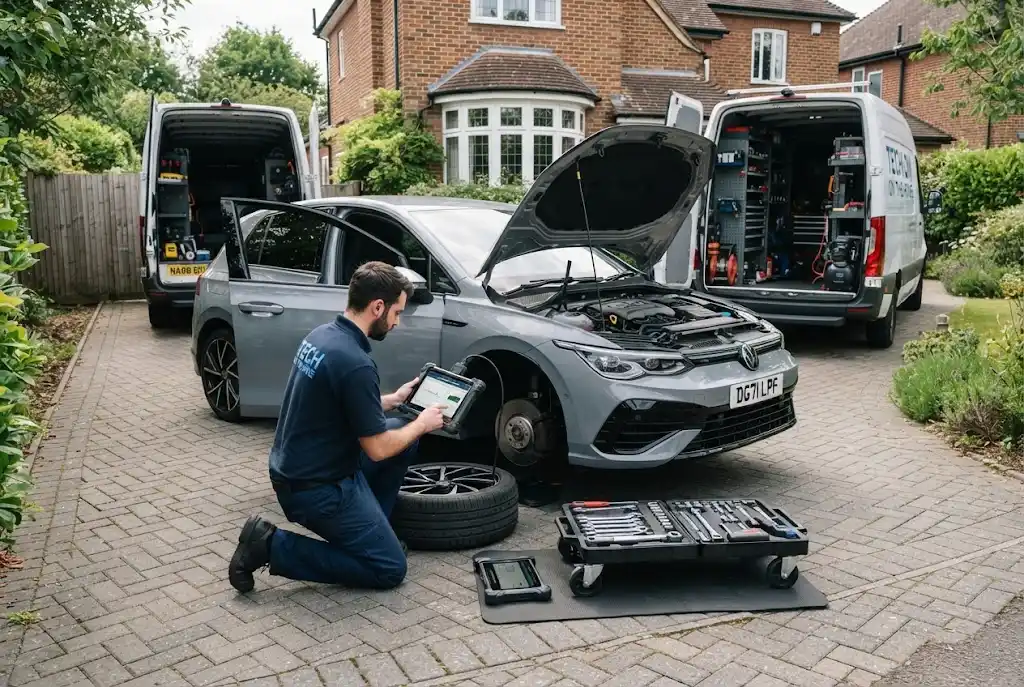


A mobile auto service brings vehicle maintenance and selected repair work directly to the customer instead of requiring every vehicle to visit a traditional workshop. As digital booking platforms, mobile diagnostic equipment and on-demand services become more common, drivers have new options for handling routine automotive needs at home, at work or in another suitable location.
The concept is particularly relevant to motorists who value convenience. A mobile mechanic can potentially travel to the vehicle for certain jobs, reducing the need for a workshop visit. However, mobile servicing is not suitable for every repair. The type of vehicle, the fault involved, available equipment and the working environment all determine what can realistically be completed away from a conventional garage.
What Is a Mobile Auto Service?
A mobile auto service is an automotive service model in which a technician travels to the customer’s vehicle rather than requiring the customer to take the vehicle to a fixed workshop. Depending on the provider, services can range from routine maintenance and inspections to selected repairs and diagnostics.
Mobile mechanics may operate from equipped vans containing tools, diagnostic equipment, replacement parts and other equipment needed for the jobs they undertake. This allows certain types of automotive work to be completed at a customer’s home, workplace or another appropriate location.
The approach can be particularly useful when a vehicle cannot easily be driven to a garage. It may also suit customers who would otherwise need to take time away from work or rearrange their schedules for a conventional workshop appointment.
Why Mobile Mechanics Are Becoming More Popular
Convenience is one of the main reasons drivers consider mobile mechanics. Traditional servicing can involve travelling to a garage, leaving the vehicle there and arranging another journey to collect it. A mobile technician can remove some of these steps when the required work can safely be completed at the customer’s location.
This model also reflects broader changes in consumer expectations. People are increasingly accustomed to booking services digitally and receiving appointments at times and locations that fit their schedules.
For vehicle owners, the attraction is straightforward: instead of building their day around a garage visit, they may be able to arrange certain automotive services around their existing routine.
This convenience-focused approach is also connected to wider modern garage innovations, including online bookings, digital communication and connected service systems.
Doorstep Repairs Can Simplify Selected Vehicle Problems
Doorstep repairs are particularly useful when a problem can be diagnosed and resolved using portable equipment. Certain maintenance and repair tasks may not require a full workshop environment, provided the technician has the appropriate tools and the location is suitable.
For example, some providers may offer battery-related services, basic diagnostics, selected maintenance tasks or minor repairs at the customer’s location. The exact service list varies between mobile mechanics, so customers should confirm what is included before booking.
More complex jobs can require specialist lifting equipment, controlled workshop conditions, additional technicians or access to replacement parts. In such cases, a mobile technician may diagnose the problem at the customer’s location before recommending that the vehicle be transported to a suitable workshop.
App-Based Servicing Makes Booking More Convenient
Digital platforms are helping mobile automotive businesses manage appointments and communicate with customers. App-based servicing can allow drivers to submit vehicle details, describe a problem, choose an available appointment and receive booking information electronically.
This can make the initial process more convenient than arranging every detail over the telephone. A digital booking system can also collect information before the technician arrives, helping the provider understand the customer’s requirements.
However, customers should still provide accurate information. A detailed description of the symptoms, vehicle model and location can help a technician determine whether the requested work is suitable for a mobile appointment.
Digital booking also fits naturally with modern auto service garage technology, where online scheduling and digital customer communication are becoming increasingly common.
Home Servicing Can Save Time
Home servicing is one of the clearest examples of how mobile automotive services change the customer experience. Instead of taking a vehicle to a workshop, a technician may perform appropriate maintenance at the customer’s home.
This can be useful for people who work remotely, have limited transport options or simply prefer to avoid spending time in a garage waiting area. It may also make routine vehicle care easier to fit into a busy schedule.
There are practical considerations, however. The location needs to provide enough space for the technician to work safely, and some repairs may not be permitted or appropriate on public roads or in unsuitable parking areas.
Customers should therefore confirm the location requirements before the appointment. A mobile service provider should also determine whether the requested work can be completed safely at the chosen site.
On-Demand Mechanics Depend on the Right Equipment
A mobile mechanic needs to balance portability with capability. A fully equipped workshop contains lifts, specialist machinery, parts storage and controlled working conditions that cannot always be replicated in a service vehicle.
Mobile technicians therefore generally focus on work that can be completed effectively with portable equipment. Modern diagnostic technology has helped expand these capabilities because technicians can carry sophisticated electronic testing equipment without needing a fixed workshop for every diagnostic task.
Digital diagnostic tools can provide valuable information about vehicle systems, but they do not eliminate the need for professional judgement. A fault code or electronic reading may identify an area requiring investigation rather than provide a complete repair solution.
This makes technician experience particularly important in mobile servicing. The professional must determine whether the available information and equipment are sufficient to complete the work safely at the customer’s location.
Consumer Demand Is Driving Service Flexibility
Modern consumers increasingly expect services to be convenient, transparent and easy to arrange. Automotive businesses are responding by offering more flexible service models, including mobile appointments and digital communication.
Consumer demand does not mean every repair needs to become mobile. Instead, it encourages the industry to consider which parts of the vehicle service journey can be made more convenient without compromising safety or quality.
For some drivers, mobile servicing may be ideal for routine work. Others may prefer a conventional workshop because their vehicle requires specialist equipment or more extensive repairs.
When Mobile Auto Service Makes Sense
A mobile service can be particularly useful in several situations:
- Routine maintenance: Some maintenance tasks can be completed using portable equipment.
- Battery problems: Certain battery-related services may be suitable for mobile assistance.
- Diagnostic visits: Portable diagnostic equipment can help technicians investigate some vehicle faults on location.
- Minor repairs: Selected repairs can be completed without a full workshop.
- Non-running vehicles: A mobile technician may be able to assess a vehicle that cannot conveniently be driven to a garage.
- Time-sensitive customers: On-location servicing can reduce travel and waiting requirements.
The suitability of a mobile appointment depends on the specific vehicle and job. Customers should not assume that every repair can be performed outside a workshop.
When a Traditional Workshop Is Still Necessary
Mobile servicing does not replace fixed garages. Many automotive jobs require equipment and facilities that are difficult or impossible to carry in a service van.
Complex mechanical repairs, extensive electrical work, specialist calibration, major component replacement and jobs requiring substantial dismantling may need a workshop environment. Vehicle lifts can also be essential for certain inspections and repairs.
A professional mobile technician should recognise these limitations. If a problem cannot be safely or properly resolved at the customer’s location, moving the vehicle to an appropriate workshop may be the correct next step.
This is one reason mobile and traditional automotive services can complement each other rather than compete directly. A mobile mechanic can handle suitable jobs while fixed workshops remain essential for more complex work.
How to Choose a Mobile Mechanic
Drivers considering a mobile mechanic should first check whether the provider has experience with their type of vehicle and the requested service. It is useful to ask what equipment the technician carries and whether the quoted price includes parts, labour, diagnostics or additional charges.
Customers should also provide as much accurate information as possible when booking. Explaining warning lights, unusual noises, recent repairs and other symptoms can help the provider assess the job before arrival.
Clear communication is especially important for mobile servicing because the technician needs to know whether the location is suitable and whether the expected work can be performed there.
Mobile Servicing and Preventive Maintenance
Mobile automotive services can also support a more proactive approach to ownership. Convenient access to maintenance can make it easier for drivers to address smaller issues before they become more disruptive.
For example, a customer may be more willing to arrange a routine inspection when the technician can visit their home or workplace. This can complement broader vehicle maintenance practices, including preventive checks and digital monitoring.
Convenience alone does not guarantee better maintenance, but removing unnecessary barriers can make it easier for owners to keep up with appropriate servicing.
The Future of Mobile Auto Service
The future of mobile auto service is likely to become increasingly connected. Digital booking, portable diagnostic technology, mobile payment systems and customer communication platforms can work together to create a more streamlined service experience.
As vehicles become more electronically sophisticated, mobile technicians may also use increasingly capable diagnostic equipment. Connected vehicle information could potentially help service providers understand a problem before arriving, although the availability and accuracy of such information will vary between vehicles and systems.
The biggest opportunity is not simply putting more technology into a van. It is creating a service model that combines appropriate equipment, skilled technicians and convenient customer communication.
A Flexible Addition to the Automotive Service Market
Mobile mechanics and on-demand servicing are changing expectations around how vehicle care can be delivered. For suitable jobs, a technician can bring tools, expertise and diagnostic equipment directly to the customer, reducing the need for a conventional workshop visit.
At the same time, fixed garages remain essential for complex repairs and work requiring specialist facilities. The two models can therefore exist together, giving motorists more choices depending on the type of work their vehicle requires.
As digital booking and connected automotive technology continue to develop, mobile services are likely to remain an important part of the broader shift towards convenient vehicle ownership. Drivers can benefit most by choosing the service model that matches the repair, location and technical requirements of their particular vehicle.
For a broader view of how automotive technology is changing servicing, the rise of smart auto repair trends shows how diagnostics, connected systems and digital tools are influencing the industry beyond mobile appointments.