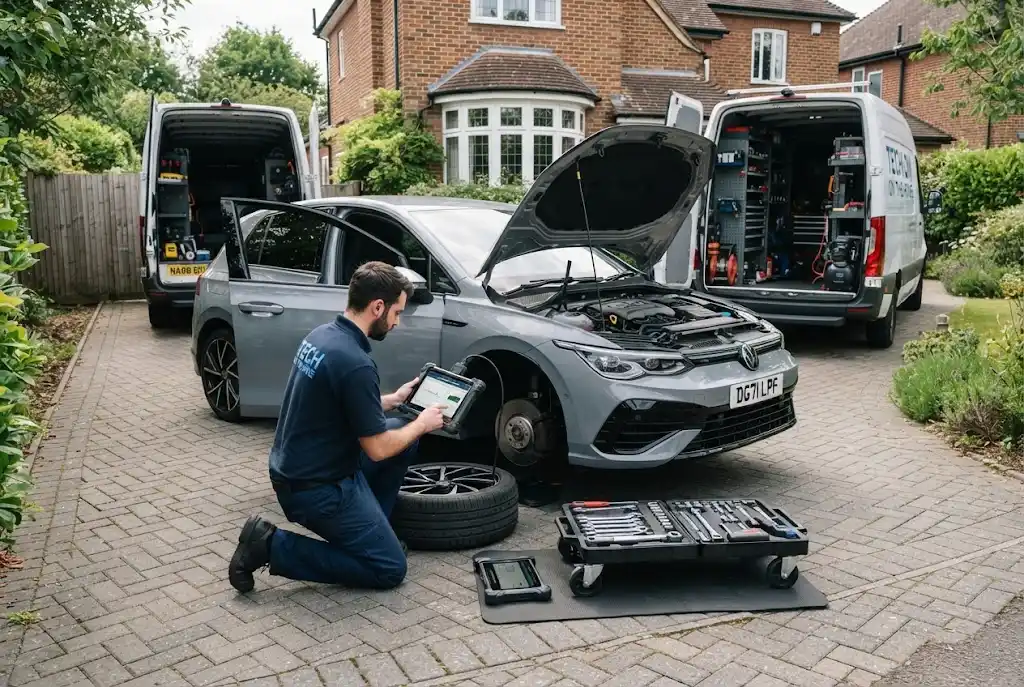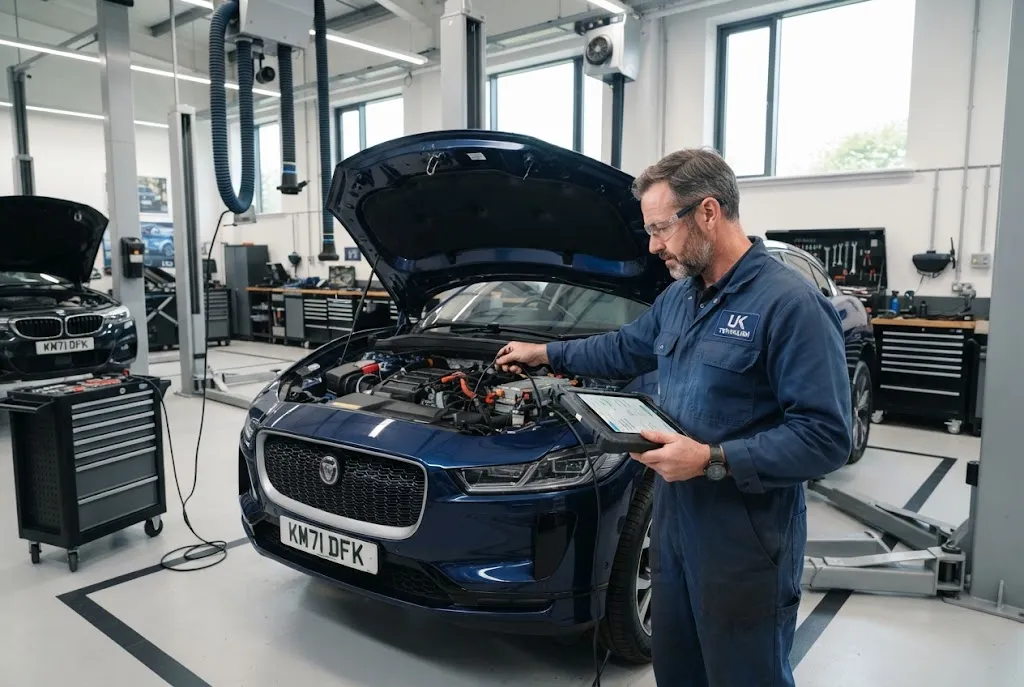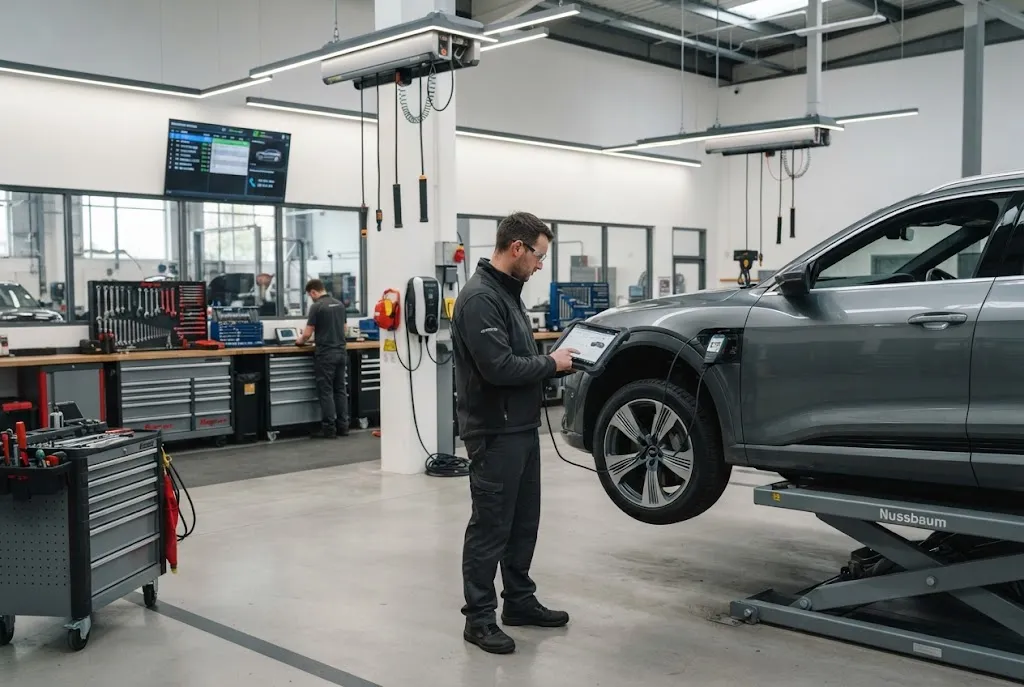


EV servicing is becoming an increasingly important part of vehicle ownership in the UK as more motorists switch from petrol and diesel cars to fully electric vehicles. Although electric vehicles have fewer traditional engine components, they still require professional inspections, maintenance and repairs throughout their lives.
Electric cars use high-voltage battery systems, electric motors, power electronics, sophisticated software and electronic control systems. They also rely on familiar safety components such as tyres, brakes, suspension and steering. As a result, maintaining an EV requires a combination of conventional automotive knowledge and specialist electrical expertise.
For owners, understanding electric vehicle maintenance can make it easier to choose a suitable workshop, recognise routine servicing requirements and understand why some repairs require specially trained technicians.
What Is EV Servicing?
EV servicing is the inspection, maintenance, diagnosis and repair of a fully electric vehicle. Unlike a conventional petrol or diesel car, an EV does not have an internal combustion engine, engine oil or many of the mechanical systems associated with combustion-powered vehicles.
However, that does not mean an electric vehicle is maintenance-free.
Electric cars still have tyres, braking systems, suspension components, steering systems, cooling systems and other equipment that requires inspection. In addition, the vehicle contains high-voltage electrical components that require specialist knowledge when maintenance or repair involves those systems.
The exact maintenance schedule varies by manufacturer and model. Owners should therefore follow the servicing requirements provided for their particular vehicle.
How EV Servicing Differs From Conventional Car Maintenance
The biggest difference between EV maintenance and conventional servicing is the powertrain.
A petrol or diesel vehicle typically requires regular attention to components such as engine oil, oil filters, spark plugs or fuel-related systems. A fully electric vehicle does not use an internal combustion engine, so many of these maintenance tasks are absent.
Instead, EV technicians may need to understand high-voltage batteries, electric motors, inverters, charging systems, battery management systems and electronic diagnostics.
This changes the skillset required in the modern workshop. The technician still needs strong knowledge of tyres, brakes, steering and suspension, but must also understand the electrical architecture of the vehicle.
What Does Electric Vehicle Maintenance Include?
The precise requirements depend on the manufacturer, but several areas are commonly relevant to electric vehicle maintenance.
Tyres and Wheels
EVs still depend on tyres for grip, braking and handling. Their weight distribution, torque delivery and regenerative braking characteristics can make tyre condition particularly important.
Technicians can inspect tread depth, pressure, uneven wear and general tyre condition during routine maintenance.
Wheel alignment can also become relevant when a vehicle shows uneven tyre wear, steering issues or changes in handling. Owners can learn more about this through our guide to wheel alignment.
Braking Systems
Electric vehicles commonly use regenerative braking, which allows energy from deceleration to be recovered and sent back into the battery system.
This can reduce the amount of work performed by conventional friction brakes in some driving conditions. However, brake discs, pads, callipers and related components still require appropriate inspection.
Brake condition should never be judged solely by how often the friction brakes appear to be used. Regular professional inspection remains important.
Suspension and Steering
Suspension and steering remain fundamental to vehicle safety regardless of the powertrain.
During servicing, technicians can inspect suspension components, steering joints and other relevant parts for wear or damage.
These checks are particularly important as vehicles age or when a driver notices changes in handling, unusual noises or uneven tyre wear.
Cooling Systems
Electric vehicles can use thermal management systems to control the temperature of batteries, motors, power electronics and other components.
The design differs between manufacturers, so technicians need access to the appropriate technical information when inspecting or repairing these systems.
Why EV Mechanics Need Specialist Training
EV mechanics need a different combination of skills from technicians who only work on conventional vehicles. High-voltage systems introduce specific hazards and require appropriate safety procedures.
The Institute of the Motor Industry offers dedicated electric vehicle qualifications covering areas such as high-voltage safety, system repair, diagnosis and component replacement. Its Level 2 routine-maintenance qualification specifically addresses safe working around high-voltage systems, while higher-level training covers direct repair and replacement work. :contentReference[oaicite:0]{index=0}
This distinction is important. Not every technician who can perform routine maintenance is necessarily qualified to repair high-voltage components directly.
When choosing a workshop, EV owners should therefore ask whether the technicians have appropriate electric vehicle training for the work their car requires.
EV Battery Servicing and Battery Health
The traction battery is one of the most important components in an electric vehicle. It stores the electrical energy used to power the motor and is managed by sophisticated electronic systems.
Battery servicing does not necessarily mean removing or opening the battery pack. Routine EV maintenance may involve checking relevant systems, diagnostics, cooling arrangements and charging behaviour, depending on the manufacturer’s procedures.
Battery condition can also be influenced by factors such as vehicle age, usage, charging patterns and temperature management. When a vehicle develops a battery-related warning or unusual charging behaviour, accurate diagnosis is important before assuming that the battery pack itself needs replacement.
Modern battery systems use management electronics to monitor and control their operation. This makes specialist diagnostic capability increasingly valuable to workshops dealing with electric vehicles.
High-Voltage Safety in EV Workshops
High-voltage safety is one of the most important differences between ordinary vehicle maintenance and certain types of EV repair.
Electric vehicle workshops need suitable procedures, equipment and technician competence when work involves high-voltage components. The IMI’s specialist training includes safe isolation, high-voltage system procedures and repair or replacement of high-voltage components. :contentReference[oaicite:1]{index=1}
Government guidance also recognises the need for appropriately trained and qualified technicians when activities involve high-voltage EV batteries, including testing, charging, discharging or dismantling. :contentReference[oaicite:2]{index=2}
For vehicle owners, the practical message is simple: high-voltage EV work should be left to appropriately trained professionals rather than treated as a normal DIY repair.
Can Any Garage Service an Electric Vehicle?
Not every workshop will offer the same level of EV capability.
Some garages may be equipped to perform routine maintenance such as tyre replacement, brake inspections and suspension work. Others may have technicians with specialist qualifications and equipment for advanced EV diagnostics and high-voltage system repairs.
Before booking an electric vehicle into a garage, it is sensible to ask what EV services the business provides and what level of technician training is available.
This is especially important when the vehicle has a high-voltage warning, charging fault or battery-related problem.
The UK’s wider automotive service companies sector is adapting to these requirements as electric vehicles become more established. Large networks and independent workshops alike are investing in training, diagnostic equipment and new service capabilities.
Why EV Diagnostics Are Becoming More Important
Modern electric vehicles depend heavily on electronic control systems. Fault diagnosis can therefore involve more than visually inspecting mechanical components.
Specialist diagnostic equipment can help technicians interpret fault codes, system data and other information generated by the vehicle.
The IMI describes EV technician roles as involving fault diagnosis through visual inspection, advanced diagnostic tools, software and data systems. :contentReference[oaicite:3]{index=3}
This means diagnostic knowledge is becoming a core part of EV workshop capability. The ability to read a fault code is only one element; technicians also need to understand what the information means and how to identify the underlying cause.
Charging Infrastructure and Vehicle Maintenance
Charging infrastructure is another important part of electric vehicle ownership. Home chargers, workplace charging points and public charging networks allow EV owners to replenish their batteries in different ways.
A vehicle’s charging behaviour can sometimes provide useful information about its condition. If an EV repeatedly experiences charging interruptions, unusually slow charging or warning messages, professional diagnosis may be appropriate.
However, charging problems do not automatically indicate a failing battery. The issue could involve the charging equipment, connection, software, vehicle electronics or another component.
That is why proper diagnosis is preferable to assuming that the battery is responsible for every charging-related problem.
EV Ownership and Routine Maintenance
EV ownership can be relatively straightforward from a maintenance perspective, but drivers should not assume that electric vehicles require no servicing.
Routine checks remain important for safety and reliability. Tyres need to be maintained correctly, brakes should be inspected, suspension components can wear over time and vehicle software or electrical systems may require attention.
The maintenance schedule supplied by the manufacturer provides the best starting point. Drivers should also pay attention to warning messages, unusual noises, changes in charging behaviour or changes in vehicle performance.
Keeping a clear service history can also help when the vehicle is sold or when a technician needs to investigate a developing issue.
How EV Servicing Is Becoming More Digital
Electric vehicles are naturally suited to increasingly digital workshop processes because so many of their systems are electronically controlled.
Modern garages can use digital inspection reports, electronic service records, diagnostic platforms and automated appointment systems to manage maintenance.
Digital vehicle inspections can make it easier for technicians to explain issues to customers. A driver may receive inspection findings and photographs electronically instead of relying entirely on a verbal explanation.
This is part of the broader transformation taking place across garage chains and digital workshops. The objective is not simply to add technology, but to make vehicle servicing more efficient and transparent.
Battery Technology and the Future of EV Maintenance
Battery technology will continue to influence how electric vehicles are maintained.
The Battery chemistry, thermal management, energy density and electronic control systems are all areas of ongoing development. As vehicle manufacturers introduce new battery designs, workshops will need to keep their knowledge and equipment up to date.
The IMI already provides advanced training covering battery design, chemistry, thermal management, regenerative braking and high-voltage component repair. :contentReference[oaicite:4]{index=4}
This demonstrates how EV maintenance is developing into a specialist technical field rather than simply becoming a reduced version of conventional car servicing.
How EV Servicing Could Affect Workshop Businesses
The growth of electric vehicles is creating both opportunities and challenges for automotive service businesses.
Workshops that invest in EV training and suitable equipment can expand the range of vehicles they are able to support. However, investment needs to be matched by sufficient customer demand and ongoing staff development.
Large garage networks may be able to distribute equipment and training costs across many locations. Independent garages can take a more targeted approach by developing specific EV capabilities that match the vehicles and customers in their local area.
This is another reason smart mobility is influencing the future of automotive servicing. The changing vehicle market is affecting not only drivers but also the businesses that maintain the UK’s vehicle fleet.
Choosing a Garage for EV Servicing
When selecting a workshop, EV owners should consider more than price or convenience.
A suitable garage should have the appropriate equipment and technician expertise for the type of work required. Drivers can ask whether the workshop regularly services electric vehicles and whether its technicians hold relevant EV qualifications or professional recognition.
It is also useful to ask whether the garage can carry out the specific task needed. Routine maintenance, diagnostics and high-voltage battery repairs can require different levels of expertise.
For more complex repairs, specialist EV capability should be treated as an important consideration rather than an optional extra.
EV Servicing Costs: What Can Influence the Price?
Electric vehicle servicing costs vary according to the model, manufacturer, workshop and type of maintenance required.
Some routine servicing tasks may be simpler because an EV does not have an internal combustion engine. However, specialist diagnostics, high-voltage repairs or battery-related work can require additional equipment and technician expertise.
Tyres, brakes and suspension can also contribute to ongoing ownership costs just as they do with conventional vehicles.
Drivers should therefore consider the entire maintenance profile of an EV rather than assuming that fewer engine-related components automatically mean every type of repair will be cheaper.
EV Servicing and the Future of Smart Mobility
The development of EV servicing is closely connected to the wider shift towards smart mobility. Electric vehicles are increasingly connected, software-driven and integrated with digital charging systems.
This creates a different relationship between the vehicle, owner and workshop. Diagnostics can provide more information, software can influence vehicle functions and charging systems have become part of everyday vehicle use.
As these technologies develop, automotive technicians will need to understand more than traditional mechanical systems. They will increasingly work across mechanical, electrical and digital disciplines.
What the Future Holds for EV Mechanics
The role of the EV mechanic is likely to become increasingly specialised as electric vehicle technology develops.
Technicians will need to maintain their understanding of battery systems, high-voltage safety, power electronics, electric motors, diagnostics and vehicle software. At the same time, traditional automotive skills will remain essential for brakes, tyres, suspension, steering and other safety systems.
Professional training will therefore remain an important part of the transition. The IMI’s current EV accreditation and qualification pathways reflect the industry’s growing need for technicians with recognised electric vehicle skills. :contentReference[oaicite:5]{index=5}
Why EV Servicing Matters for UK Drivers
Electric vehicles may have fewer conventional powertrain components, but they still require proper maintenance. The difference is that servicing increasingly combines traditional automotive inspection with electrical and digital expertise.
For drivers, choosing the right workshop is therefore an important part of responsible EV ownership. Routine maintenance should follow the manufacturer’s requirements, while high-voltage work should be carried out by appropriately trained professionals.
For the automotive industry, the rise of electric vehicles represents a major shift in technical skills, workshop equipment and customer expectations.
As battery technology develops and charging infrastructure expands, EV servicing will become an increasingly normal part of the UK automotive aftermarket. Workshops that invest in training, diagnostics and safe working practices will be better placed to support the growing number of electric vehicles on British roads.
The future of vehicle maintenance will not be purely mechanical or purely digital. It will combine both, with skilled technicians using advanced technology to keep increasingly sophisticated vehicles safe, reliable and ready for everyday driving.