

Hybrid servicing is becoming an increasingly important part of vehicle maintenance in the UK as more drivers choose cars that combine an internal combustion engine with electric power. Hybrids can offer a different driving experience from conventional petrol and diesel vehicles, and their servicing requirements can also differ.
Although hybrid vehicles still contain many familiar components, they also use high-voltage electrical systems, electric motors, battery packs, sophisticated control systems and regenerative braking technology. This means workshops need appropriate equipment, knowledge and safety procedures to maintain them properly.
For hybrid owners, understanding how servicing works can make it easier to choose a suitable garage, recognise routine maintenance requirements and plan for long-term ownership costs. It also helps explain why technician training and specialist diagnostic equipment are becoming increasingly important across the UK automotive service sector.
What Is Hybrid Servicing?
Hybrid servicing refers to the inspection, maintenance and repair of a vehicle that uses both an internal combustion engine and an electric propulsion system.
The exact servicing requirements depend on the type of hybrid. Some vehicles use a conventional petrol engine supported by an electric motor, while plug-in hybrids generally have larger batteries that can be charged externally and may travel further using electric power alone.
Despite these differences, hybrid maintenance usually combines familiar mechanical checks with additional inspections relating to the vehicle’s electrical and electronic systems.
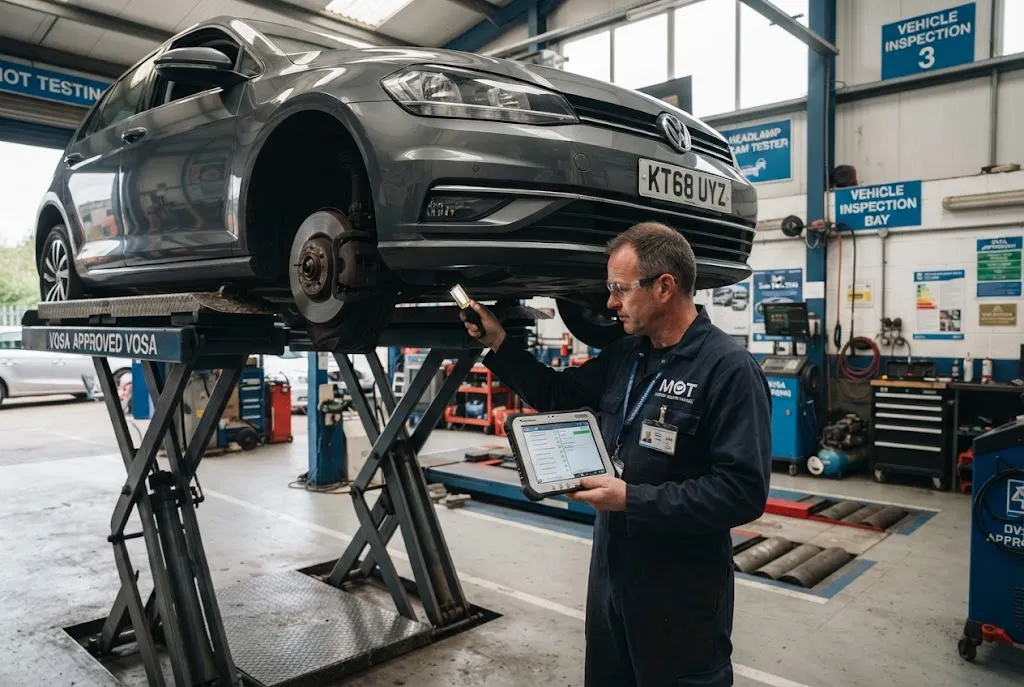
A routine appointment may involve engine oil and filter checks, brake inspections, tyre checks, suspension assessment, fluid inspections and diagnostic testing. Depending on the vehicle and manufacturer’s maintenance schedule, technicians may also inspect hybrid-specific components and systems.
Why Hybrid Services Are Different
Hybrid vehicles are designed to switch between, or combine, different sources of propulsion. This requires sophisticated control systems that continuously manage the interaction between the engine, electric motor, battery and other components.
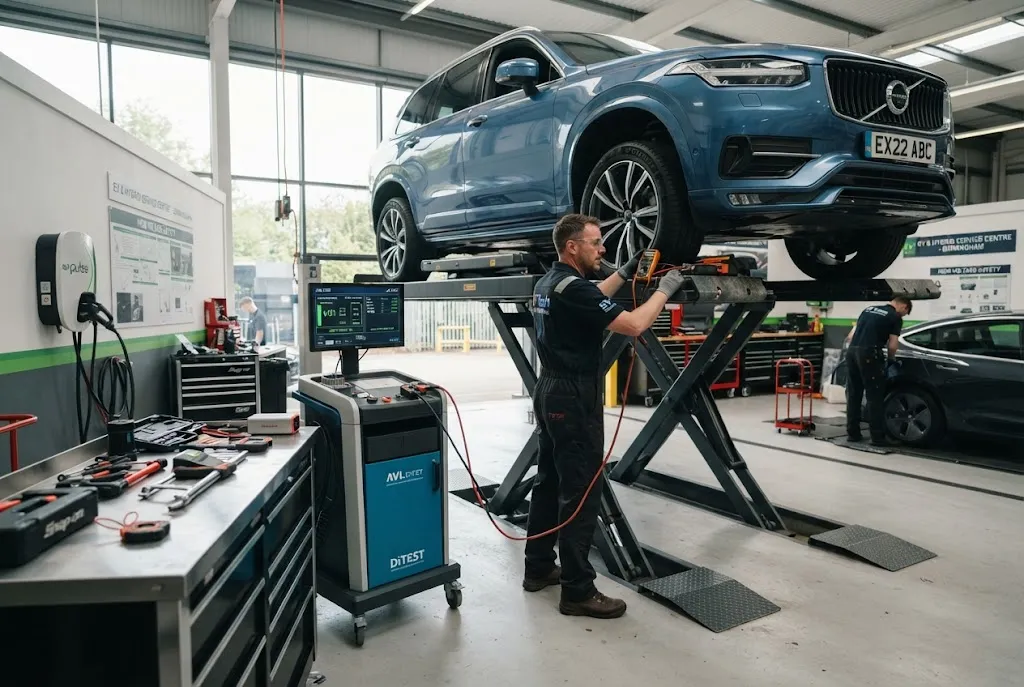
The electrical system introduces additional safety considerations. High-voltage components are not systems that an untrained technician should simply handle as part of ordinary vehicle maintenance.
Professional workshops therefore need suitable training and procedures when working on hybrid systems. Diagnostic equipment can also help technicians identify faults and understand how different parts of the vehicle are operating.
This does not mean every hybrid needs specialist attention for every routine job. Many ordinary maintenance tasks remain familiar to experienced technicians. However, the workshop should have the appropriate competence when a job involves the vehicle’s high-voltage or hybrid-specific systems.
What Does a Typical Hybrid Service Include?
The precise maintenance schedule is determined by the vehicle manufacturer and model, but common service checks can include several familiar areas.
Engine and Fluid Checks
Hybrid vehicles that use combustion engines still require appropriate engine maintenance. Oil, filters, coolant and other fluids may need inspection or replacement according to the manufacturer’s schedule.
Even though the engine may operate differently from one in a conventional vehicle, it remains an important part of the powertrain.
Brake Inspection
Hybrid vehicles commonly use regenerative braking, where energy generated during deceleration is recovered and used to help charge the battery.
Because regenerative braking can reduce reliance on conventional friction brakes in some driving conditions, brake component wear can differ from what a driver might expect. However, brake inspections remain essential because discs, pads and other components still need to remain in good condition.
Tyres and Suspension
Tyres, steering and suspension remain fundamental safety components regardless of the vehicle’s powertrain.
Technicians can inspect tread condition, tyre pressure, suspension components and steering systems during scheduled maintenance. Correct tyre condition is particularly important because tyres influence handling, braking performance and energy efficiency.
For drivers interested in maintenance beyond hybrid-specific systems, services such as wheel alignment can also be relevant when steering behaviour, tyre wear or suspension work indicates that alignment should be checked.
Diagnostic Testing
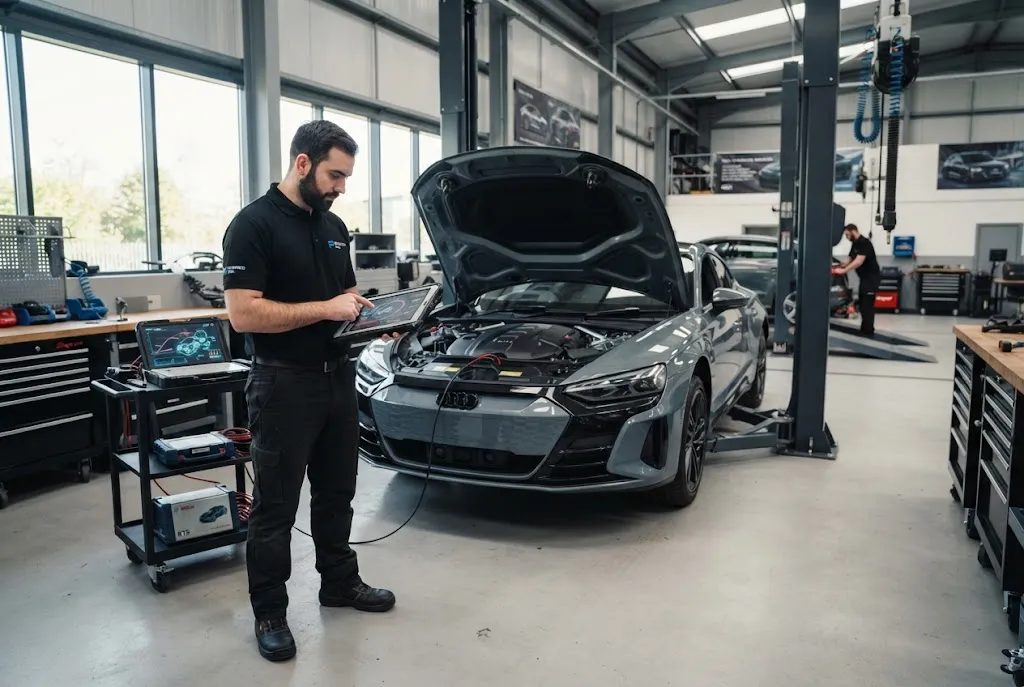
Electronic diagnostics can play an important role in modern hybrid maintenance. A suitable diagnostic system can help technicians identify fault codes and assess vehicle systems that are difficult to evaluate through a purely mechanical inspection.
As vehicle technology continues to develop, diagnostic capability is becoming increasingly important for both large networks and independent workshops.
Toyota Hybrid Service and Manufacturer Maintenance
Toyota hybrid service is often discussed because Toyota has a large presence in the hybrid vehicle market and has developed hybrid systems across numerous models.
Also Toyota UK’s hybrid service information states that its Hybrid Health Check is designed to assess key components of the hybrid system, including the battery, cooling system and other relevant components. ([toyota.co.uk](https://www.toyota.co.uk/owners/servicing-and-aftercare/hybrid-service?utm_source=chatgpt.com))
This highlights an important principle for hybrid owners: manufacturer-specific maintenance information matters. Different hybrid systems use different technologies and service procedures, so owners should follow the maintenance schedule and recommendations applicable to their particular vehicle.
Manufacturer servicing can also provide access to technicians and diagnostic systems familiar with the relevant vehicle technology. Independent garages may also be suitable when they have the required training, equipment and technical information.
How Hybrid Battery Technology Affects Maintenance
Battery technology is one of the most important differences between hybrid and conventional vehicles.
A hybrid battery stores electrical energy that can be used to assist propulsion or operate the vehicle’s electric systems. Its design, capacity and management system depend on the vehicle.
Modern hybrid batteries are engineered for repeated charging and discharging, but their performance can change over time. Temperature, usage patterns, vehicle age and other factors can influence battery performance.
Drivers should not assume that every battery-related issue automatically means the entire battery pack needs replacement. Proper diagnosis is important because the underlying issue could involve another component, cooling system or electrical control system.
This is another reason specialist diagnostics and qualified technicians matter when a hybrid develops a warning light or unusual behaviour.
Does Hybrid Ownership Require More Servicing?
Hybrid ownership does not necessarily mean that a vehicle will require more routine servicing than a conventional car. Instead, the maintenance profile is different.
Some components may experience less wear under certain driving conditions, while the vehicle still requires normal maintenance for tyres, suspension, fluids, brakes and other systems.
The most important consideration is whether the servicing schedule is followed. Regular maintenance can help identify developing problems before they become more serious and can provide a useful record of the vehicle’s condition.
Owners should therefore avoid assuming that a hybrid is maintenance-free simply because some of its propulsion comes from an electric motor.
Where Should You Take a Hybrid for Servicing?
Hybrid owners have several potential options, including manufacturer dealerships, national garage networks and independent workshops.
The right choice depends on the vehicle, the work required and the capabilities of the workshop.
A garage handling hybrid systems should have appropriately trained technicians and suitable equipment for the work being carried out. For routine mechanical maintenance, a capable independent garage may be perfectly suitable. For complex high-voltage diagnostics or manufacturer-specific issues, specialist expertise may be particularly valuable.
Many UK automotive service companies are adapting their workshop capabilities as hybrid and electric vehicles become more common. Technician training is therefore becoming an increasingly important part of the automotive aftermarket.
Why Technician Training Matters
Hybrid systems introduce electrical hazards and technical procedures that require appropriate training. A technician needs to understand how the vehicle’s high-voltage system works and how it should be isolated before certain repairs are attempted.
Training also helps technicians understand hybrid-specific diagnostic information. A warning message may have multiple potential causes, and accurate diagnosis can prevent unnecessary component replacement.
Large garage networks can invest in structured training programmes across multiple locations, while independent workshops can use specialist training providers and aftermarket networks to develop their capabilities.
The expansion of hybrid technology is therefore changing the skills required throughout the automotive service industry.
Hybrid Servicing and Sustainable Transport
Hybrid vehicles are often discussed as part of the wider transition towards sustainable transport. They can combine an internal combustion engine with electric propulsion and may reduce the need for the engine to operate continuously in certain driving situations.
However, a hybrid remains a complex vehicle that requires proper maintenance throughout its life.
Responsible vehicle ownership includes maintaining tyres, brakes, fluids, electrical systems and other components according to manufacturer guidance. Keeping a hybrid properly maintained can support its reliability and help owners get the expected performance from the vehicle.
Servicing also has a role in the broader sustainability discussion because extending the useful life of existing vehicles can reduce the need for premature replacement.
How Hybrid Maintenance Is Becoming More Digital
Modern workshops increasingly use digital tools to manage vehicle servicing. Electronic inspection reports, diagnostic systems, digital service records and automated maintenance reminders can all support the customer journey.
For hybrid vehicles, digital diagnostics can be particularly useful because many important systems are electronically controlled.
Some workshops can provide customers with digital inspection reports that explain recommended repairs and show evidence from the inspection. This can make technical information easier for motorists to understand.
Digital systems can also help garages track maintenance histories, schedule future appointments and identify recurring issues. These developments form part of the wider shift towards garage chains and workshop innovation.
Hybrid Servicing for Older Vehicles
As the UK’s hybrid fleet becomes older, maintenance needs will naturally change. A vehicle that was relatively new when first purchased may eventually require attention to components that are not normally associated with routine servicing.
Battery performance, cooling systems, electrical components and other hybrid-specific systems may become increasingly relevant as mileage and vehicle age increase.
This makes maintenance history particularly useful. A clear record can help a technician understand what has already been inspected or replaced and identify potential patterns when diagnosing a problem.
Owners of older hybrids should therefore consider the vehicle’s complete maintenance history rather than focusing only on the engine or battery.
Hybrid Servicing Costs and What Influences Them
The cost of hybrid servicing varies considerably depending on the vehicle, workshop, location and type of work required.
A routine service may involve many of the same mechanical checks found on conventional vehicles. More complex work involving hybrid-specific systems can require specialist equipment and additional technician expertise.
Battery-related work can also vary substantially depending on the underlying fault and vehicle design. A warning light does not automatically mean a complete battery replacement is required, so diagnosis should come before major repair decisions.
Drivers can help manage costs by following the manufacturer’s maintenance schedule, addressing warning signs promptly and choosing a workshop with appropriate hybrid expertise.
Questions to Ask Before Booking a Hybrid Service
Before booking a hybrid into a garage, owners can ask a few practical questions.
- Does the workshop have technicians trained to work on hybrid vehicles?
- Does it have suitable diagnostic equipment?
- Can it safely handle high-voltage hybrid systems?
- Will the service follow the manufacturer’s maintenance requirements?
- Will the customer receive a clear explanation of any recommended repairs?
- Can the workshop provide a digital or written service record?
These questions can help motorists distinguish between a garage that simply accepts hybrid vehicles and one that has developed genuine capability in hybrid maintenance.
The Future of Hybrid Services in the UK
Hybrid vehicles are likely to remain an important part of the UK’s vehicle mix as drivers move between conventional engines, hybrids and fully electric vehicles.
This means hybrid services will continue to evolve. Workshops will need to maintain technician skills, update diagnostic equipment and understand the changing designs used by different manufacturers.
The boundary between conventional mechanical servicing and advanced electrical diagnostics will also continue to become less distinct. Technicians increasingly need to understand both disciplines.
For workshop operators, this represents an investment opportunity as well as a technical challenge. Businesses that develop strong hybrid capabilities can serve customers throughout more of the vehicle ownership lifecycle.
Hybrid Servicing and the Future of Mobility
The development of hybrid servicing is closely connected with the wider concept of future mobility. Vehicles are becoming more connected, more electronically controlled and increasingly diverse in their powertrains.
This means the workshop of the future will need to support a broader range of technologies rather than relying on a single type of mechanical expertise.
Hybrid vehicles occupy an important position within that transition. They combine established engine technology with electric propulsion, giving workshops valuable experience with systems that are also relevant to the broader electrification of transport.
For drivers, the key takeaway is straightforward: hybrid ownership does not eliminate the need for maintenance. Instead, it changes what competent servicing looks like.
Why Proper Hybrid Maintenance Matters
Hybrid vehicles can be reliable and practical, but they still require appropriate care. Routine servicing helps monitor conventional mechanical components while qualified technicians can assess the vehicle’s hybrid-specific systems when necessary.
As battery technology and vehicle electronics continue to develop, specialist knowledge will become increasingly valuable across the UK automotive service sector.
The best approach for owners is to follow the manufacturer’s maintenance schedule, respond promptly to warning signs and use a workshop with the appropriate training and equipment for the vehicle.
For the automotive industry, the growth of hybrids represents more than another vehicle category. It is part of a broader transformation in how cars are designed, diagnosed and maintained. Workshops that adapt to these changes will be better prepared for the next stage of mobility.